 艺廊
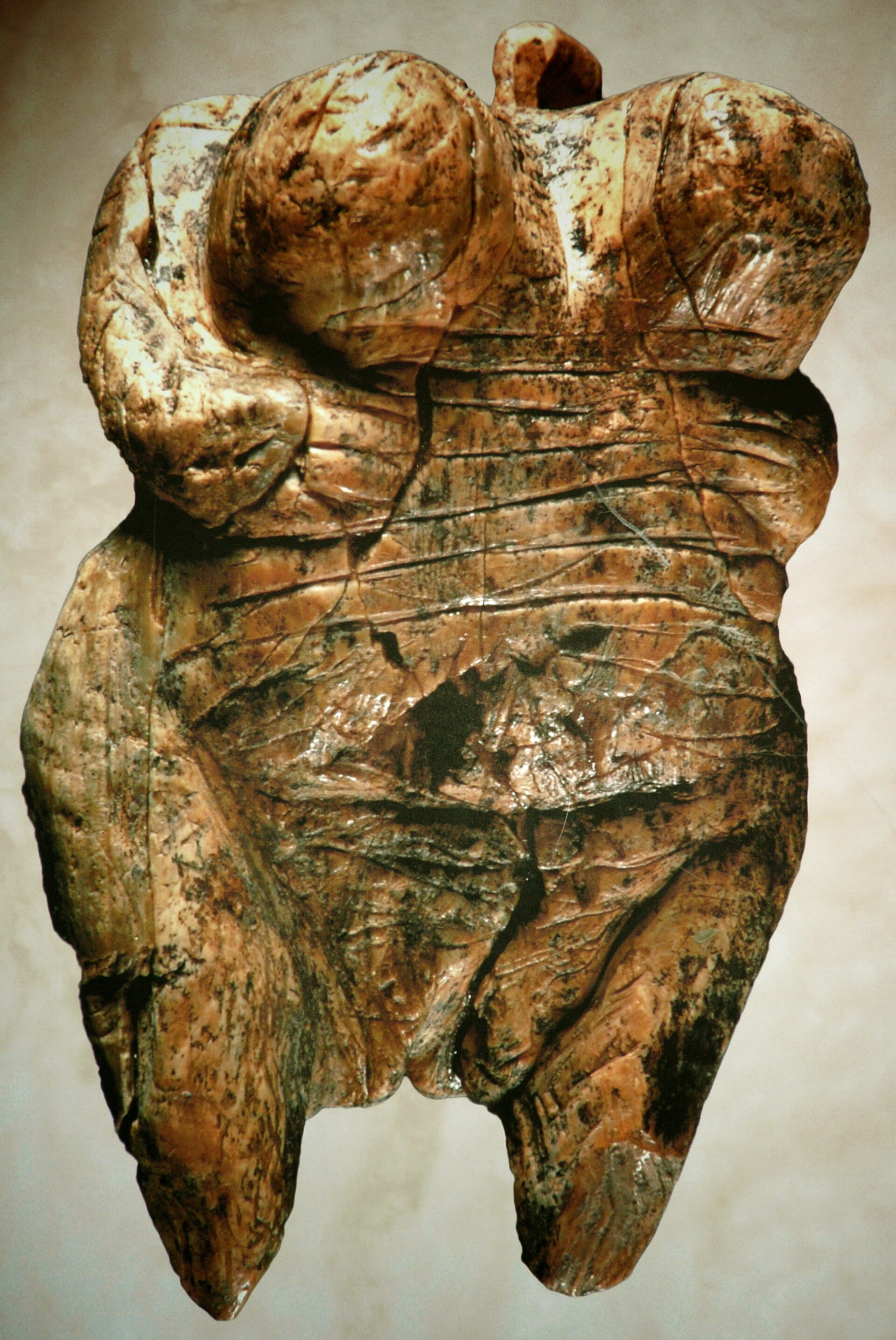
霍勒费尔斯维纳斯
Venus of Hohle Fels
The Venus of Hohle Fels (also known as the Venus of Schelklingen; in German variously Venus vom Hohlen Fels, vom Hohle Fels; Venus von Schelklingen) is an Upper Paleolithic Venus figurine made of mammoth ivory that was unearthed in 2008 in Hohle Fels, a cave near Schelklingen, Germany, part of the Caves and Ice Age Art in the Swabian Jura UNESCO World Heritage Site. It is dated to between 42,000 and 40,000 years ago, belonging to the early Aurignacian, at the very beginning of the Upper Paleolithic, which is associated with the earliest presence of Cro-Magnons in Europe.
The figure is the oldest undisputed example of a depiction of a human being. In terms of figurative art only the lion-headed, zoomorphic Löwenmensch figurine is possibly older. The Venus is housed at the Prehistoric Museum of Blaubeuren (Urgeschichtliches Museum Blaubeuren).
摘自英文维基百科「Venus of Hohle Fels」(CC BY-SA 4.0),暂时没有中文条目。