艺廊
资料卡
- 出生
- 1741 年
- 出生地
- 彻斯特
- 去世
- 1827 年
- 逝世地
- 费城
- 安葬地
- St. Peter's Churchyard
- 国籍
- 美国
- 职业
- 科学家、自然科学家、作家、军人、政治人物、发明家 等 8 项
- 领域
- 绘画
- 流派
- 新古典主义
- 学生
- Jeremiah Paul
- 所属团体
- Peale family
- 父亲
- Charles Peale
- 母亲
- Margaret Triggs Peale
- 配偶
- Elizabeth DePeyster Peale、Rachel Brewer Peale、Hannah Moore Peale
资料来自 Wikidata Q454945(CC0)。
生平与创作
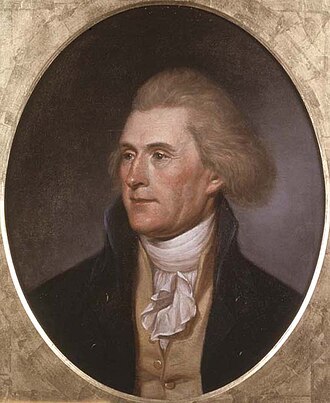
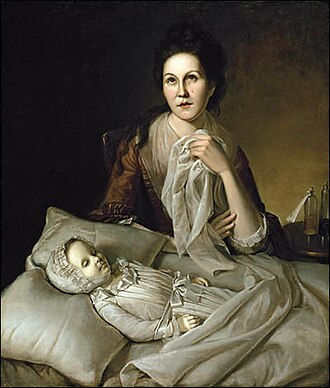
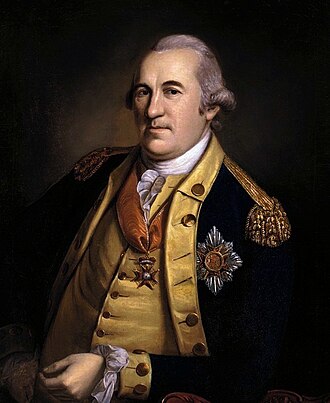
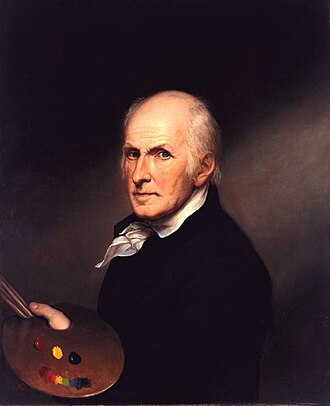
查尔斯·威尔逊·皮尔(Charles Willson Peale,1741年4月15日—1827年2月22日)是一位美国画家。他在美国革命期间绘制了许多作品,后来还创立了美国第一座博物馆,即今宾夕法尼亚美术学院。
他早年是一个做马鞍的工匠,但是生意不景气,因此改行做了画家,师从约翰·赫西留斯、约翰·辛格尔顿·科普利,更曾前往英格兰找本杰明·韦斯特学习。他的儿子有三人后来也成为了画家。
摘自维基百科「查尔斯·威尔逊·皮尔」,按 CC BY-SA 4.0 使用,繁体已转简体,去掉了参考文献、外部链接等尾部小节和表格,其余文字未作改动。
中文条目比较短,展开看英文维基百科的条目(英文原文)
Charles Willson Peale (April 15, 1741 – February 22, 1827) was an American painter, military officer, scientist, and naturalist.
In 1775, inspired by the American Revolution, Peale moved from his native Maryland to Philadelphia, where he set up a painting studio and joined the Sons of Liberty. During the American Revolutionary War, Peale served in the Pennsylvania Militia and the Continental Army, participating in several military campaigns. In addition to his military service, Peale also served in the Pennsylvania State Assembly from 1779 to 1780.
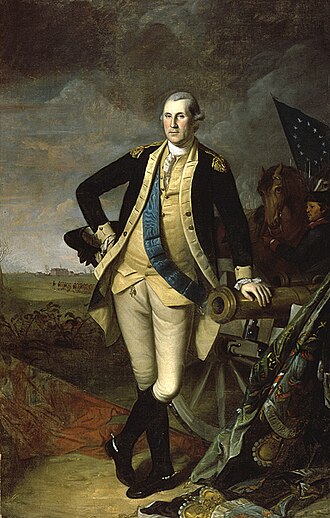
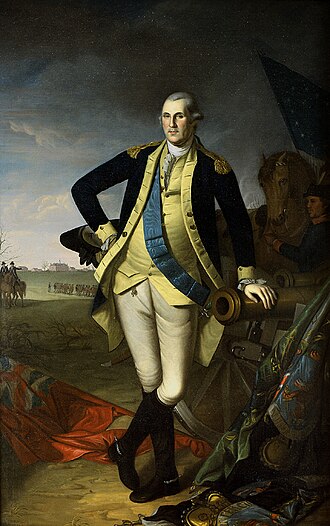
Peale's portraits of leading American figures of the late 18th century are some of the most recognizable and prominent from that era. In 1784, he founded the Philadelphia Museum, one of the first American museums. More than two centuries after Peale painted his 1779 portrait Washington at Princeton — the painting sold for $21.5 million, the highest price ever paid for an American portrait.
Early life
Peale was born on April 15, 1741, in Queen Anne's County, Maryland. He was the son of Charles Peale (1709–1750) and his wife Margaret Triggs (1709–1791). Peale had a younger brother, James Peale (1749–1831), and was the brother-in-law of Nathaniel Ramsey, who would go on to serve as a delegate to the Congress of the Confederation.
Career
Four years after his father's death in 1750, Peale, at age 13, became an apprentice to saddle maker Nathan Waters. When he reached maturity, Peale opened his own saddle shop.
In 1764, Peale joined Sons of Liberty, an organization of the Thirteen Colonies that proved influential in organizing and paving the way for the American Revolution. He proved unsuccessful in saddle making as a career and then tried fixing clocks and working with metals, but both of these endeavors also failed. He then took up painting.
Finding that he had a talent for painting, especially portraiture, Peale studied for a time under John Hesselius and John Singleton Copley. John Beale Bordley and friends eventually raised enough money for him to travel to England to take instruction from Benjamin West. Peale studied with West for three years beginning in 1767, afterward returning to North America and settling in Annapolis, Maryland. There, he taught painting to his younger brother, James Peale, who in time also became a noted artist.
American Revolution
In 1775, Peale's enthusiasm for the American Revolution and the new national government led him to move from Maryland to Philadelphia, then the national capital, where he began painting portraits of notable Americans and visitors from overseas. His estate, now located at La Salle University in Philadelphia, is open to the public. Peale also recruited troops for the Pennsylvania militia, which ultimately joined with other militias to create the Continental Army, commanded by George Washington. In the Pennsylvania militia, Peale rose to the rank of captain and participated in several battles including the Battle of Trenton and Battle of Princeton. While in combat, he painted miniature portraits of various officers in the Continental Army. He produced enlarged versions of these in later years. After the Revolutionary War, he served in the Pennsylvania state assembly for a year, from 1779 to 1780, and then returned to painting full-time in Philadelphia.
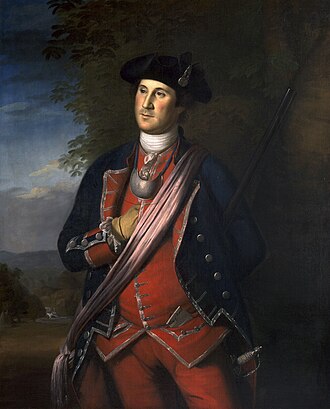
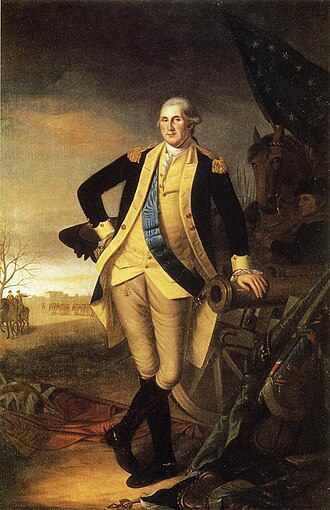
Peale was a prolific artist. He completed portraits of scores of historic figures, including Benjamin Franklin, John Hancock, Thomas Jefferson, Alexander Hamilton, James Mitchell Varnum, and George Washington. In 1771, Washington sat for a portrait with Peale, and he later sat six additional times. Using the seven portraits he painted of Washington, Peale produced close to 60 portraits of Washington. In January 2005, one of them, Peale's Washington at Princeton sold for $21.3 million (~$33.7 million in 2025), setting a record for the highest price paid for a North American portrait.
In 1794, Peale designed the first state seal of Maryland.
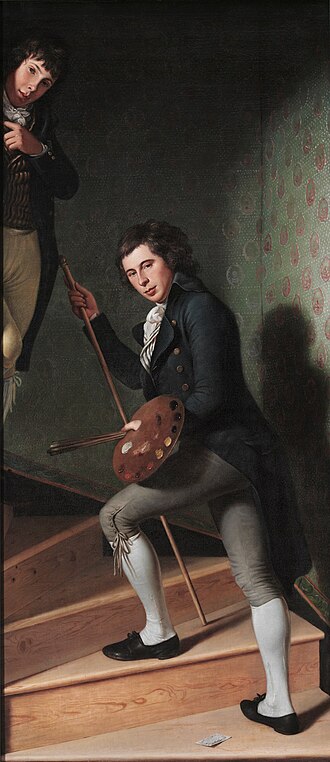
One of his most celebrated paintings is The Staircase Group (1795), a double portrait of his sons Raphaelle and Titian, is painted in the trompe-l'œil style and appears today in the Philadelphia Museum of Art. While interplaying with space and illusion, the painting also subtly commented on political debates about nationalism, education, and civic identity in the early America.
节选,摘自英文维基百科「Charles Willson Peale」,按 CC BY-SA 4.0 使用。
同时代的美国画家
流派与收藏
作品(20)