 艺廊
作品介绍
Bulgarian epigraphic monuments (Chuvash: Пăлхар эпиграфика палăкĕсем, Tatar: Болгар эпиграфика табылдыклары) – tombstones with inscriptions (epitaphs) of the 13th–14th centuries on the territory of the former Bulgarian ulus of the Golden Horde. The identified gravestones can be divided into several categories. From a "civilizational" point of view, there are such:
Muslim arabographic, of which there are currently about 400 pieces;
Armenian ones with their own graphics, in the amount of 5 pieces and a few more obscure fragments; They also contain Arabic letters.
Muslim tombstones, in turn, can be classified according to language:
only with Arabic text;
having, in addition to Arabic, a text in some Turkic language
Depending on the type of Turkic language, the last group of monuments is divided as follows:
tombstones in the Turkic language (r-language, this group is the largest);
gravestones in Turkic z-language
There is also a classification based on the appearance of monuments, in accordance with their artistic features – 1st style and 2nd style.
Tombstones of the 1st style usually have text in z-language, and 2nd style – text in p-language. Therefore, it was initially believed that such a classification covers all the characteristics in a complex. However, there are exceptions to this correspondence.
History of the study
The study of Bulgarian epigraphic monuments has a three-century history. The beginning was made by the decree of Peter I in 1722, after he personally visited the Bulgar settlement.link to nowhere, what settlement?
In 1831, the orientalist J. Klaproth first published Bulgarian epitaphs. And in 1863, Kh. Faizkhanov read the inscriptions, relying on data from the Chuvash language. This is what it looked like in his article:
The expression JIATI JUR in many Bulgarian tombstones attracts special attention. In my photographs this phrase is very clear, so even with it the signs are placed like this: JIATI JUR. This phrase is usually taken to be Arabic, translated into the words: the coming of oppression, and giving it the meaning of a special era, they derive from the numerical value of the letters the year 623. In my opinion, such an explanation can hardly be correct... Shouldn't we, without going into any guesswork, simply read JIATI JUR, i.e. JIТI JUZ? My reading is supported by the Tatar custom of pronouncing and writing the initial "I" as "J"... As for the letter “R”, used instead of “Z” in the word ҖҮR, this can be explained partly by the clarity (as in the word SKR, i.e. SIKEZ) of the meaning even without a period, and partly by the use of Chuvash numerals in the epitaphs of that time.
Despite the fact that he actually revealed the “blatant Chuvashness” of the texts, Kh. Faizkhanov continued to consider the epigraphic monuments "Tatar" (this can be seen from the given fragment of his article). But this is not the main thing here.
The incident in the course of attempts to translate the expression JIATI JUR was described by A. I. Artemyev (1820–1874) in 1866 in a book published in St. Petersburg;
he actually supported Kh. Faizkhanov and showed the fallacy of his predecessors (the aforementioned Y. Klaproth, F. I. Erdman, I. Berezin and others). The mentioned year 623 AH according to the usual chronology is 1226, therefore, with the old interpretation, it would turn out that the tombstone is from the pre-Mongol time. In fact, all the monuments date back to the Golden Horde era. Kh. Faizkhanov's discovery was also supported by N.I. Ilminsky, although he argued that "the venerable mullah expressed... the idea not specifically, but in passing,... and therefore hesitantly and incompletely.”
Subsequently, the work "Bulgarians and Chuvashs" (1902). of N.I. Ashmarin played a particularly important role in revealing the essence of epigraphic monuments.
As for the quantitative side, Nikolai Ashmarin considered only 93 tombstones. There is an erroneous opinion that the later researcher G.V. Yusupov considered 200 such monuments, but only 40 of them belonged to the 13th–14th centuries. The remaining monuments are of later origin. However, the total number of known r-language monuments by that time was also more than 200, it's just that G.V. Yusupov did not thoroughly study all of them, so it should be understood.
In the tables compiled by D. G. Mukhametshin, one can already count 362 pieces. Another source, citing the same D.G. Mukhametshin, gives a different number of the total number of gravestones examined (274) and some other figures – perhaps these are earlier data.
In the XX century, Bulgarian epigraphic monuments in linguistic also analyzed N.F. Katanov, N. Poppe, S.E. Malov, O. Pritsak, Róna-Tas and Fodor S., F.S. Khakimzyanov, T. Tekin, M. Erdal and others.
Most of the identified monuments are now in museums. Including in the funds of the Bulgarian, Bilar, lawsuit-Kazansky museums-reserve, in the National Museum of the Tatarstan, in the Museum of Fine Arts of the Tatarstan, Chistopol, Tetyushsky museums of the Republic of Tatarstan, in Gima (Moscow), in the Ulyanovsk Museum of Local Lore, in the National Museum of Chuvash Republic.
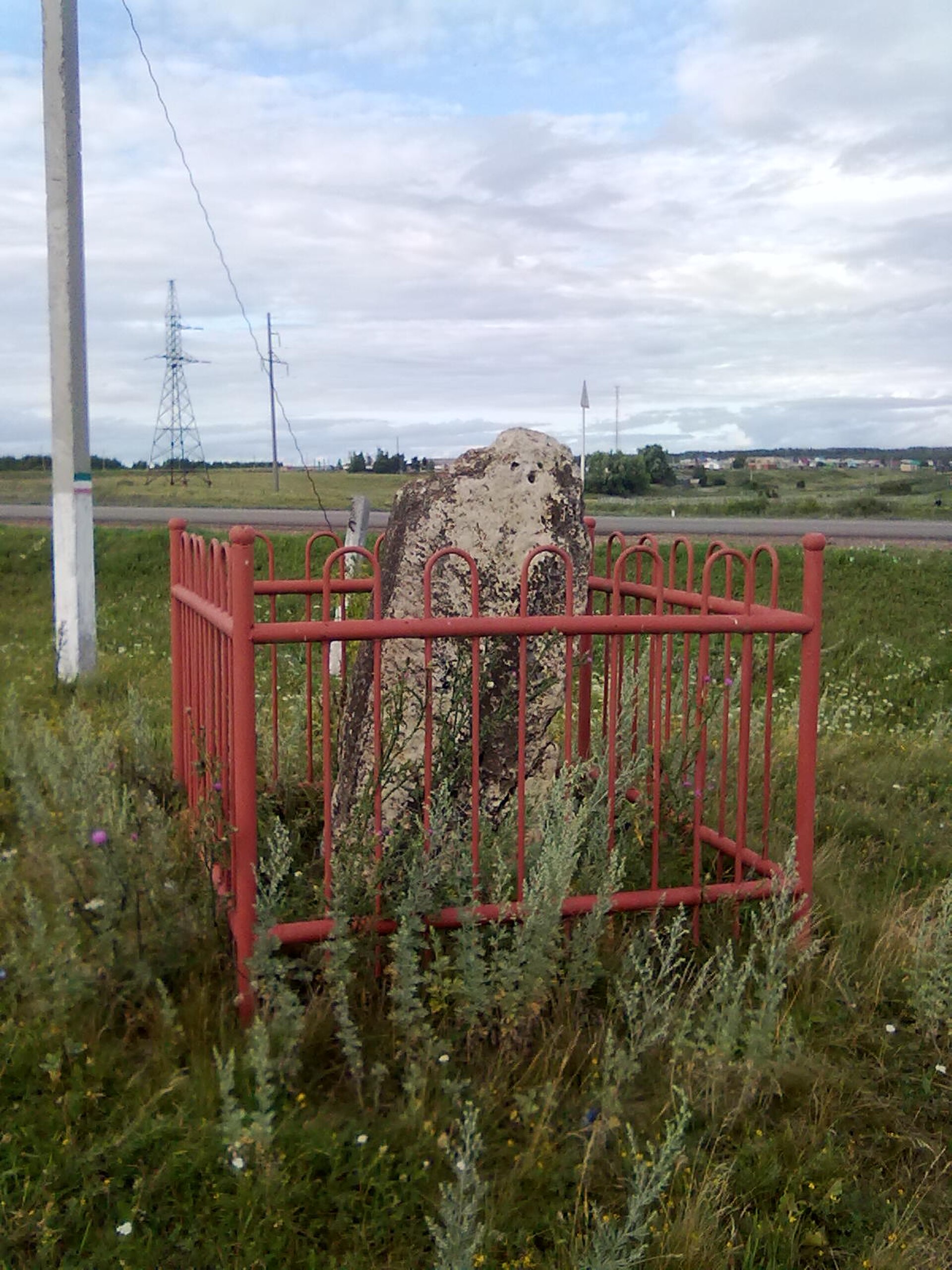
But this is not exhausted by this. For example, there is an appropriate monument in the school museum of the village of Kurmanaevo Nurlatsky district of Tatarstan. There are those who continue to remain in their places of identification.
Muslim bilingual tombstones
Bulgarian monuments with only Arabic inscription, which are not very many, occupy a special place among the entire Bulgarian epigraphy. It is difficult to judge the ethno -language belonging of people, but you can learn about their social and personal life.
A completely different thing if the monuments are bilingual, having, in addition to Arabic, and text in Turkic. There are even tombstones of single-speaking-Turkic (there are few of them), as well as one three-and-language-with Arabic, Turkic z- and r-linguistic texts.
It is not known what their carriers on the Volga and Kama in the XIII -XIV centuries called their Turkic languages. In any case, the R-language of this period and the region in science is called the Middle Bulgarian, Volga-Bulgarian or simply Bulgarian.
原文较长,这里只摘了前面一部分,摘自英文维基百科「Bulgarian epigraphic monuments」(暂时没有中文条目,下面是英文原文),按 CC BY-SA 4.0 使用,去掉了参考文献、外部链接等尾部小节和表格,其余文字未作改动。