艺廊
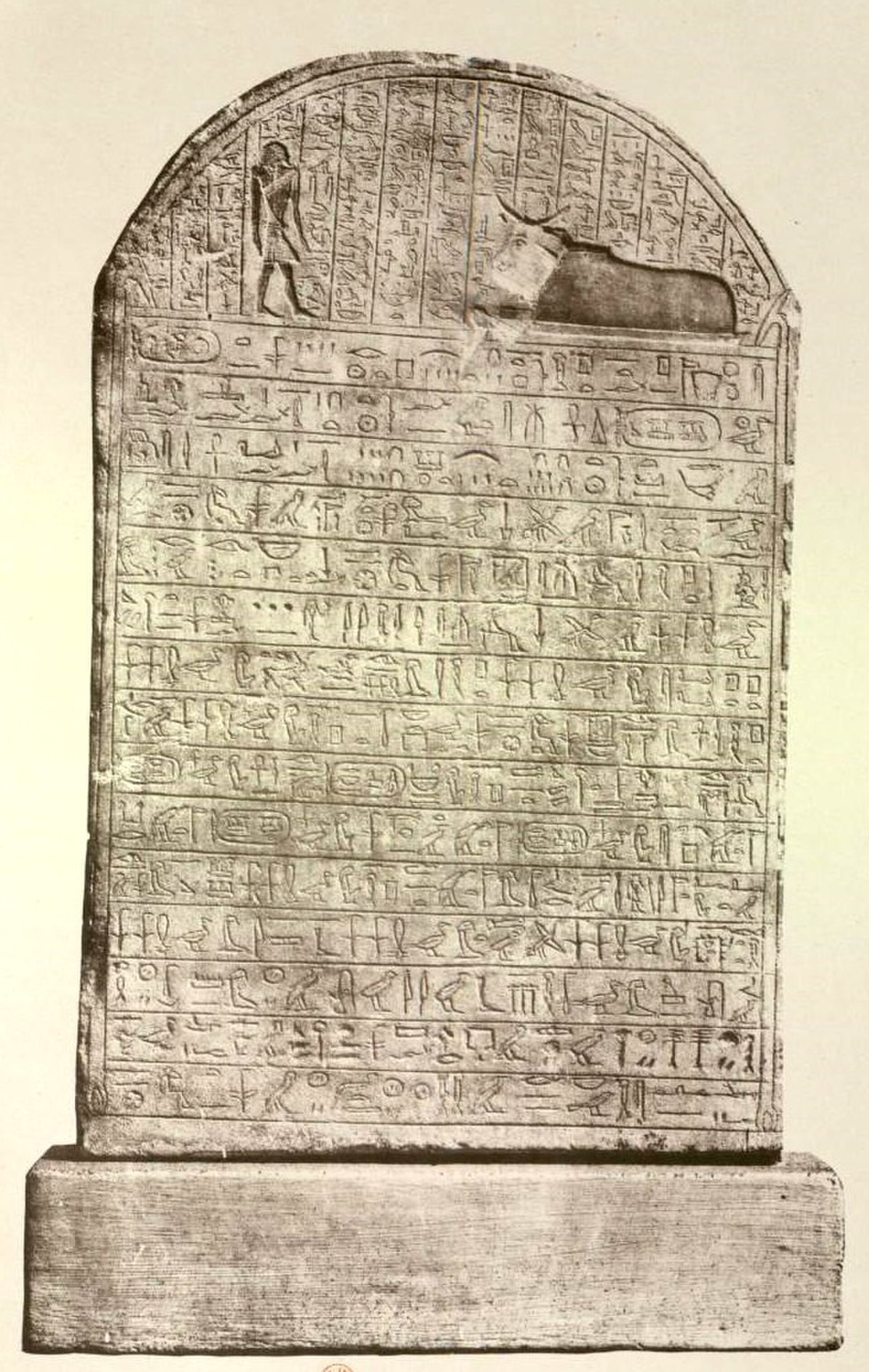
Stela of Pasenhor
- 年代
- 公元前 766–前 729 年
- 地点
- Louvre Museum storage
- 材质
- 石灰岩
- 尺寸
- 29 × 18.5(高 × 宽,多为厘米)
- 国家
- 埃及
The Stela of Pasenhor, also known as Stela of Harpeson in older literature, is an ancient Egyptian limestone stela dating back to the Year 37 of pharaoh Shoshenq V of the 22nd Dynasty (c.730 BCE). It was found in the Serapeum of Saqqara by Auguste Mariette and later moved to The Louvre, where it is still.
The stela was intended to commemorate the death of an Apis bull occurred in this year and its author, the Priest of Ptah and Prophet of Neith, Pasenhor (B), was the performer of the funerary rites. Despite the commemorative nature of the stela, Pasenhor took the opportunity to inscribe his own genealogy on it.
The first part of the stela reflects its original purpose:
This god (i.e. the Apis) was introduced to his father Ptah (i.e. was "enthroned"), in the Year 12, fourth month of the second season, fourth day, of King Aakheperre Shoshenq (V), given life. He was born in the year 11 of his …
摘自英文维基百科「Stela of Pasenhor」(CC BY-SA 4.0),暂时没有中文条目。
相关作品