 艺廊

Statue of Pharaoh Osorkon I
- 年代
- 公元前 10 世纪
- 材质
- 石英岩
- 尺寸
- 60 × 36(高 × 宽,多为厘米)
- 国家
- 朱拜勒
The Osorkon Bust, also known as the Eliba'l Inscription, is a bust of Egyptian pharaoh Osorkon I, discovered in Byblos (in today's Lebanon) in the 19th century. Like the Tabnit sarcophagus from Sidon, it is decorated with two separate and unrelated inscriptions – one in Egyptian hieroglyphics and one in Phoenician script. It was created in the early 10th century BC, and was unearthed c. 1881, very likely in the Temple of Baalat Gebal.
The Egyptian writing is the prenomen of Osorkon, and the Phoenician is a dedication to Elibaal, the king of Byblos.
The details of the find were published in by French archaeologist René Dussaud in 1925.
The bust is made of quartzite, and is 60 cm × 36 cm × 37.5 cm.
摘自英文维基百科「Osorkon Bust」(CC BY-SA 4.0),暂时没有中文条目。
相关作品

米沙石碑
Mesha · 公元前 839 年

秃鹫石碑
公元前 2460 年代
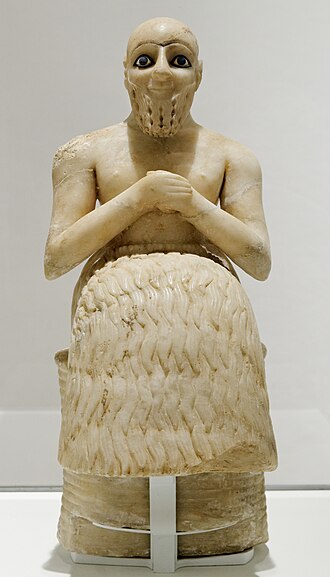
Statue of Ebih-Il
公元前 2399 年
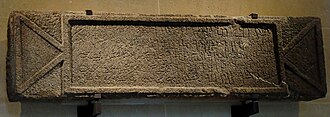
Namara inscription
328 年

Investiture of Zimrilim
公元前 18 世纪

Lion of Mari
公元前 2 千纪

拉尔萨崇拜者
公元前 2 千纪

Royal head
公元前 2 千纪
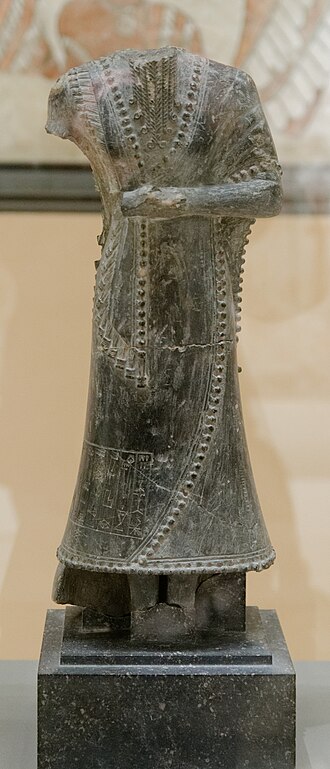
Statue of Iddi-Ilum
公元前 2089 年
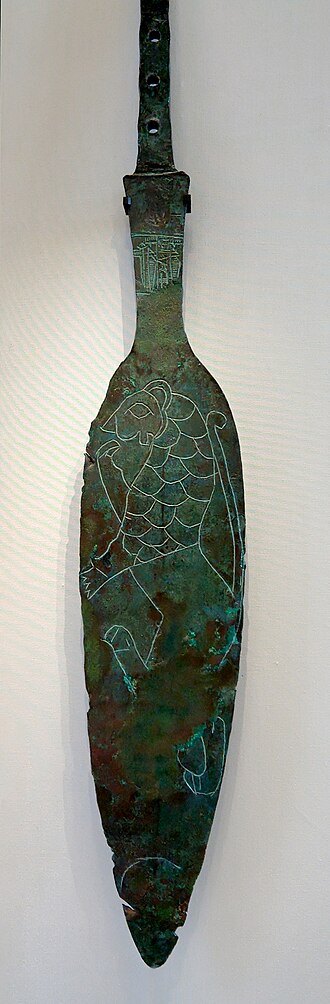
Spear of Lugal
公元前 2599 年

Land grant to Marduk-apla-iddina I by Meli-Shipak II
公元前 1185–前 1171 年
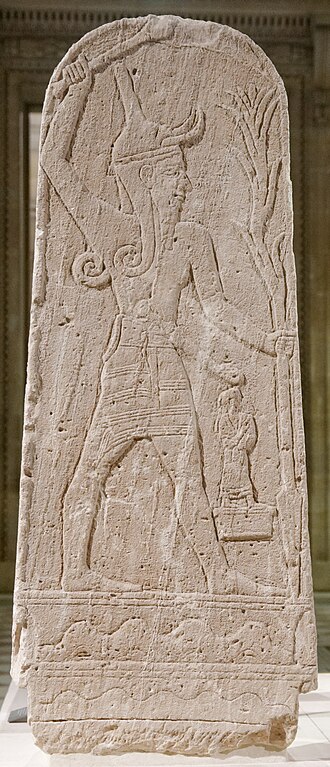
Baal with Thunderbolt
公元前 15 世纪