艺廊
作品介绍
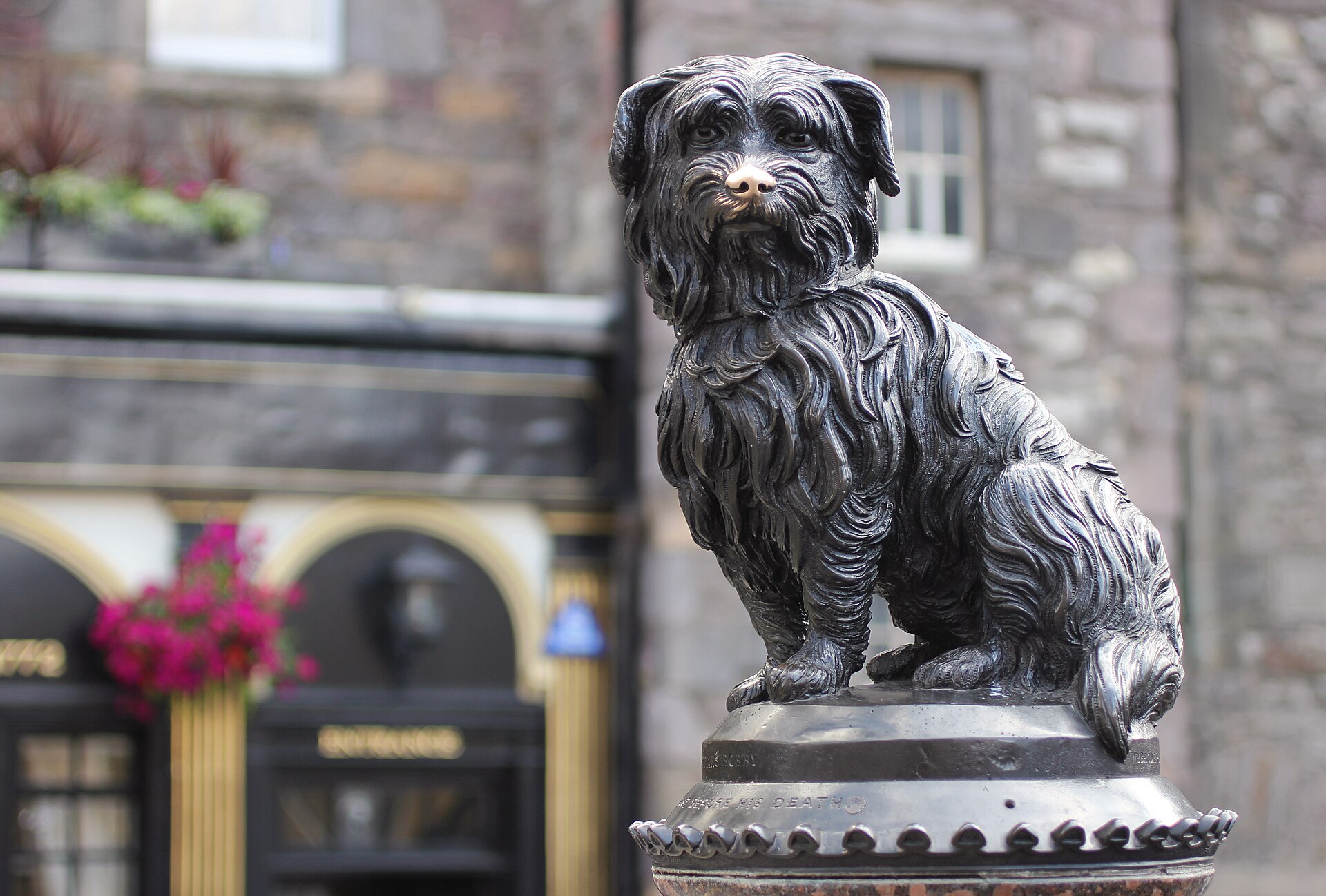
忠犬巴比雕像(英语:Greyfriars Bobby Fountain)是一座位在苏格兰爱丁堡,用于纪念忠犬巴比的青铜雕像。巴比是19世纪的一只斯凯㹴,它在其主人约翰·格雷去世后整整十四年守护着主人的坟墓,直到它自己于1872年1月14日去世为止。
当时英国皇家防止虐待动物协会妇女委员会主席安吉拉·伯德特-库茨深受忠犬巴比的事迹感动,在她要求与赞助下建立了这座立在花岗岩喷泉上的忠犬巴比雕像。雕像由雕塑家威廉·布洛迪制作,启用于1873年11月,地点位在爱丁堡乔治四世桥的南端,灰衣修士教堂墓地和苏格兰国立博物馆的附近。
该雕像在1977年成为英国A级保护建筑。
多年来,忠犬巴比雕像成为当地的知名观光景点;一些人为了追求好运会去摩擦雕像的鼻子,致使该部位严重掉漆,地方当局不得不时常修复。
摘自维基百科「忠犬巴比雕像」,按 CC BY-SA 4.0 使用,繁体已转简体,去掉了参考文献、外部链接等尾部小节和表格,其余文字未作改动。
中文条目比较短,展开看英文维基百科的条目(英文原文)
The Greyfriars Bobby Fountain is a granite fountain in Edinburgh, surmounted by a bronze life-size statue of Greyfriars Bobby, a Skye Terrier or Dandie Dinmont Terrier who became known in 19th-century Edinburgh for supposedly spending 14 years guarding the grave of his owner John Gray, until the dog himself died on 14 January 1872.
The fountain is located at the southern end of George IV Bridge, to the immediate east of Greyfriars Kirkyard and adjacent to the National Museum of Scotland. It was unveiled on 15 November 1873 and is Edinburgh's smallest listed building.
History and design
The memorial was commissioned by Lady Burdett-Coutts, president of the Ladies Committee of the RSPCA, shortly before the dog died, and the bronze statue was made from life by William Brodie. At the time, Brodie was making statues of characters from Walter Scott's Waverley novels for the Scott Monument in Princes Street.
The statue is mounted on a polished column of granite, 3 feet (91 cm) high and 20 inches (51 cm) in diameter, above a polished granite basin 3 feet (91 cm) in diameter, mounted on a plinth, with an octagonal drinking trough at ground level. Bronze plaques are mounted on the column. The fountain was originally furnished with two bronze drinking cups which were attached to the column by a chain. The supply of water to the fountain was discontinued in 1957, and the monument was neglected until its restoration in 1985.
Rubbing the nose
The statue's nose is a popular feature for tourists, who believe that it brings luck if rubbed. The City of Edinburgh Council discourages this as it causes damage to the structure, and Edinburgh residents have campaigned to discourage the tradition.