艺廊
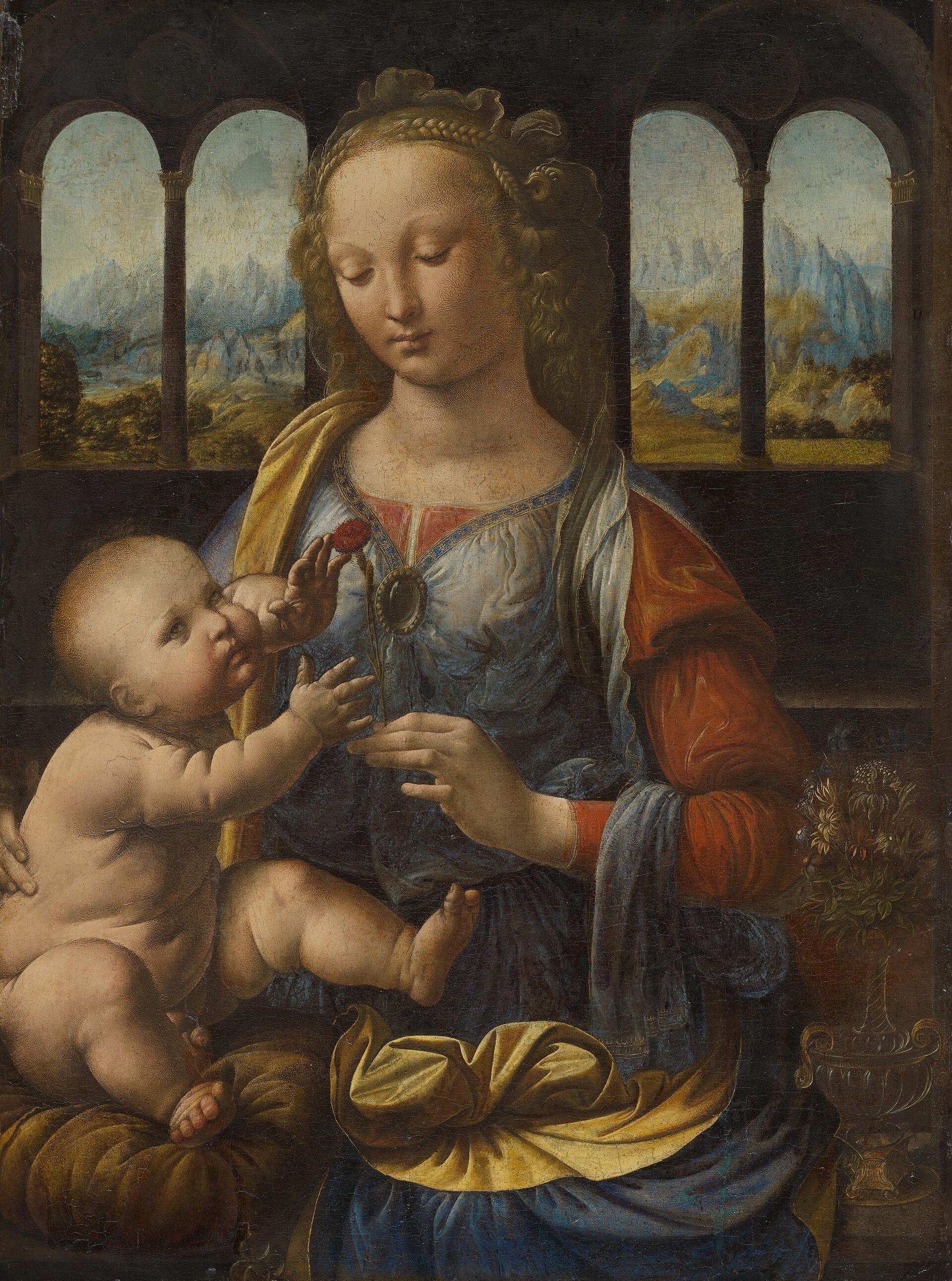
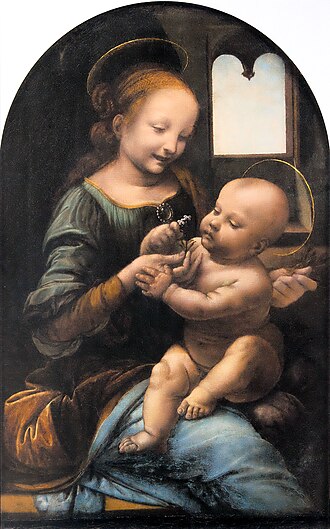
圣母的康乃馨
Madonna of the Carnation
- 年代
- 1475 年
- 地点
- Alte Pinakothek, upper floor, gallery IV
- 材质
- 油彩、画板
- 尺寸
- 62 × 47.5(高 × 宽,多为厘米)
- 国家
- 德国
- 描绘对象
- 圣母玛利亚、圣婴耶稣
- 主题
- 与孩子的圣母
- 馆藏编号
- 7779
- 展览经历
- Florence and its Painters: From Giotto to Leonardo da Vinci
作品资料来自 Wikidata(CC0)。
作品介绍
《康乃馨圣母》是列奥纳多·达·芬奇在1478-1480年间完成的一幅油画,自1889年起展览于慕尼黑的老绘画陈列馆中,但依旧是私人藏品。
画作中心是圣母玛利亚和幼年的耶稣,圣母穿着华丽并饰有珠宝,左手持着一支康乃馨,除去圣母和圣子之外其他景色全部都是黑暗的。起初画作被认为是韦罗基奥的作品,但后来转而成为达芬奇画作。
摘自维基百科「康乃馨圣母」,按 CC BY-SA 4.0 使用,繁体已转简体,去掉了参考文献、外部链接等尾部小节和表格,其余文字未作改动。
中文条目比较短,展开看英文维基百科的条目(英文原文)
The Madonna of the Carnation, also known as the Madonna with Vase, Madonna with Child or Virgin with Flower, is a Renaissance oil painting by Leonardo da Vinci created around 1478–1480. It is permanently displayed at the Alte Pinakothek gallery in Munich, Germany.
The central and centered motif is the young Virgin Mary seated with Baby Jesus on her lap. Depicted in sumptuous clothes and jewellery, with her left hand Mary holds a carnation (red, suggesting blood and the Passion). The faces are put into light while all other objects are darker, e.g. the flower is covered by a shadow. The child is looking up and the mother looking down, with no eye contact. The setting of the portrait is a room with two windows on each side of the figures.
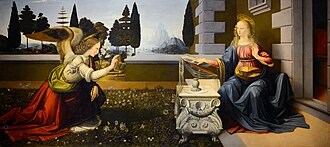
Originally this painting was thought to have been created by Andrea del Verrocchio, but subsequent art historians agree that it is Leonardo's work, probably made during his apprenticeship to Verrocchio. The Virgin's hair, left hand, the drapery, and flowers are similar to elements of Leonardo's Annunciation.
相关词条
相关作品