艺廊
Avarice
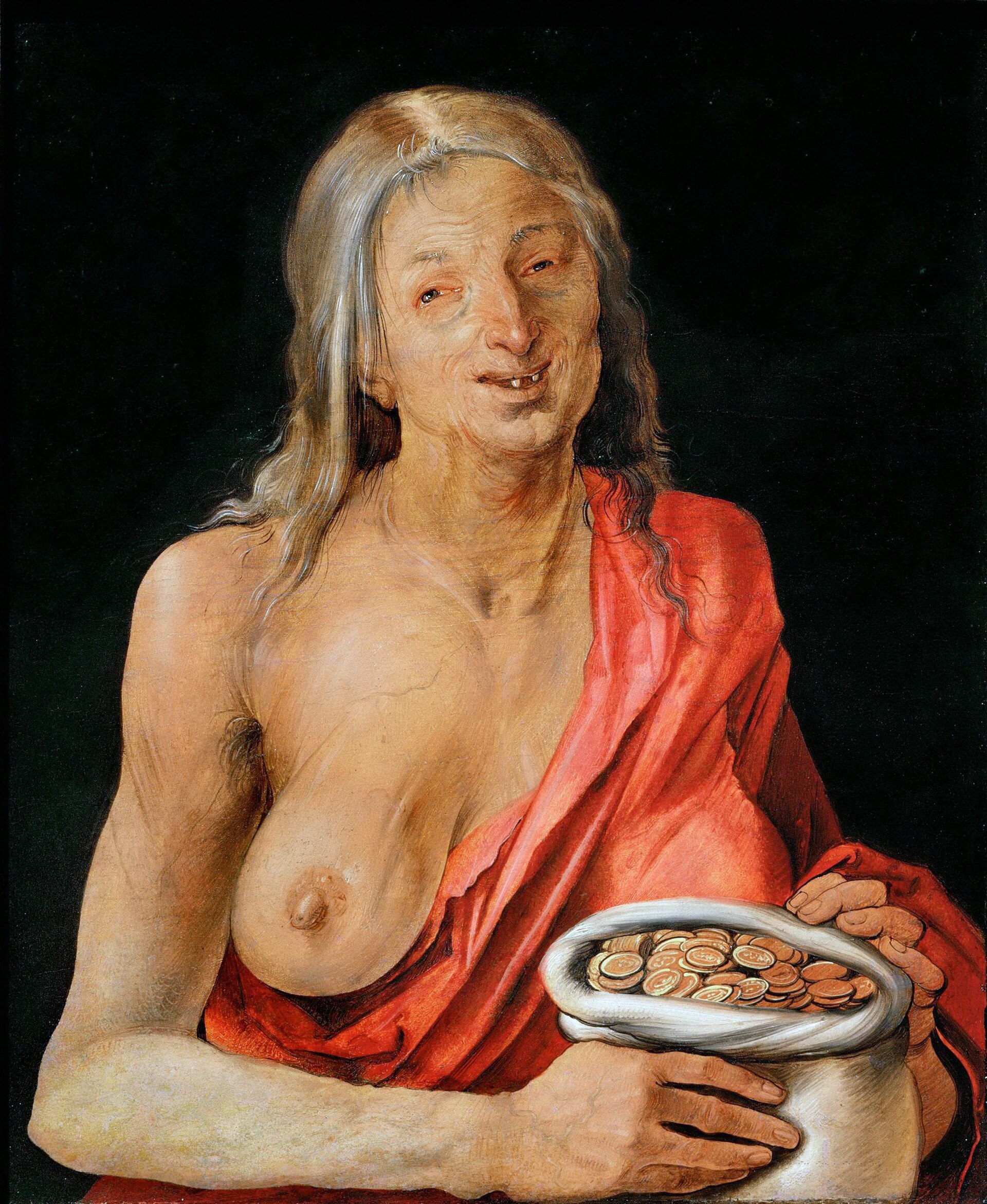
Avarice (German: Allegorie des Geizes) is a small (35 × 29 cm) oil-on-limewood painting of 1507 by Albrecht Dürer (1471–1528). The work is found on the reverse of his Portrait of Young Man; it has been speculated, though it is impossible to know, that they were intended to form part of a diptych. Avarice is allegorical and serves as a warning at both the transience of life and the ultimate worthlessness of earthly fortune. It is generally grouped, along with Melencolia I, as one of Dürer's vanitas images.
Intended to represent both avarice and the passing nature of youthful beauty, the woman is shown in half-length, painted in thick impasto. She has long and straight blond hair, glazed eyes, a long nose, a pinched jaw and a mouth with only two remaining teeth, which is twisted in a scornful laugh. Her visible right arm is muscular and out of proportion to the rest of her body, while a dar…
摘自英文维基百科「Avarice (Dürer, Vienna)」(CC BY-SA 4.0),暂时没有中文条目。
相关作品