艺廊
名画 › 弗朗西斯科·德·戈雅
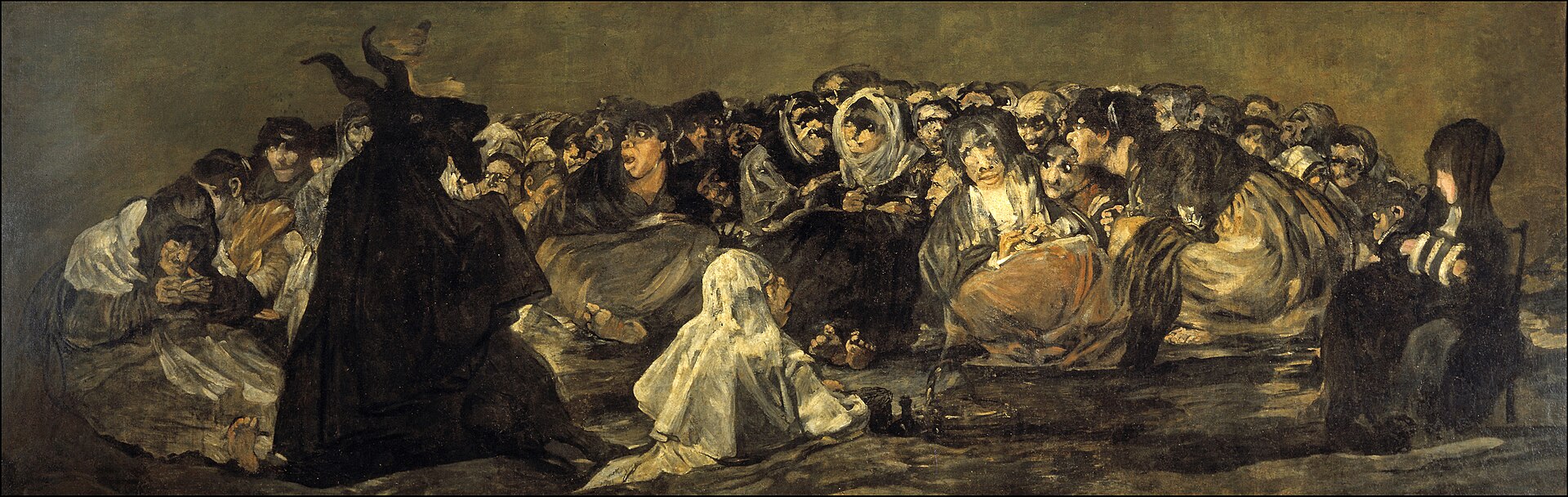
巫婆的安息日
Witches' Sabbath
Witches' Sabbath or The Great He-Goat (Spanish: Aquelarre or El gran cabrón) are names given to an oil mural by the Spanish artist Francisco de Goya, completed sometime between 1820 and 1823. It depicts a Witches' Sabbath and evokes themes of violence, intimidation, ageing and death; Satan hulks in the form of a goat in moonlit silhouette over a coven of terrified old witches. Goya was then around 75 years old, living alone and suffering from acute mental and physical distress.
The work is one of the fourteen Black Paintings that Goya applied in oil on the plaster walls of his house, the Quinta del Sordo. The series was completed in secret: he did not title any of the works or leave a record of his intentions in creating them. Absent of fact, Witches' Sabbath is generally seen by some art historians as a satire on the credulity of the age, a condemnation of superstition and the witch tria…
摘自英文维基百科「Witches' Sabbath (The Great He-Goat)」(CC BY-SA 4.0),暂时没有中文条目。
相关作品