艺廊
作品介绍
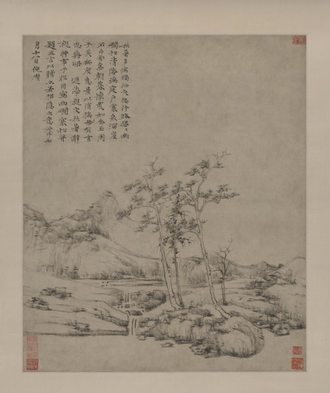
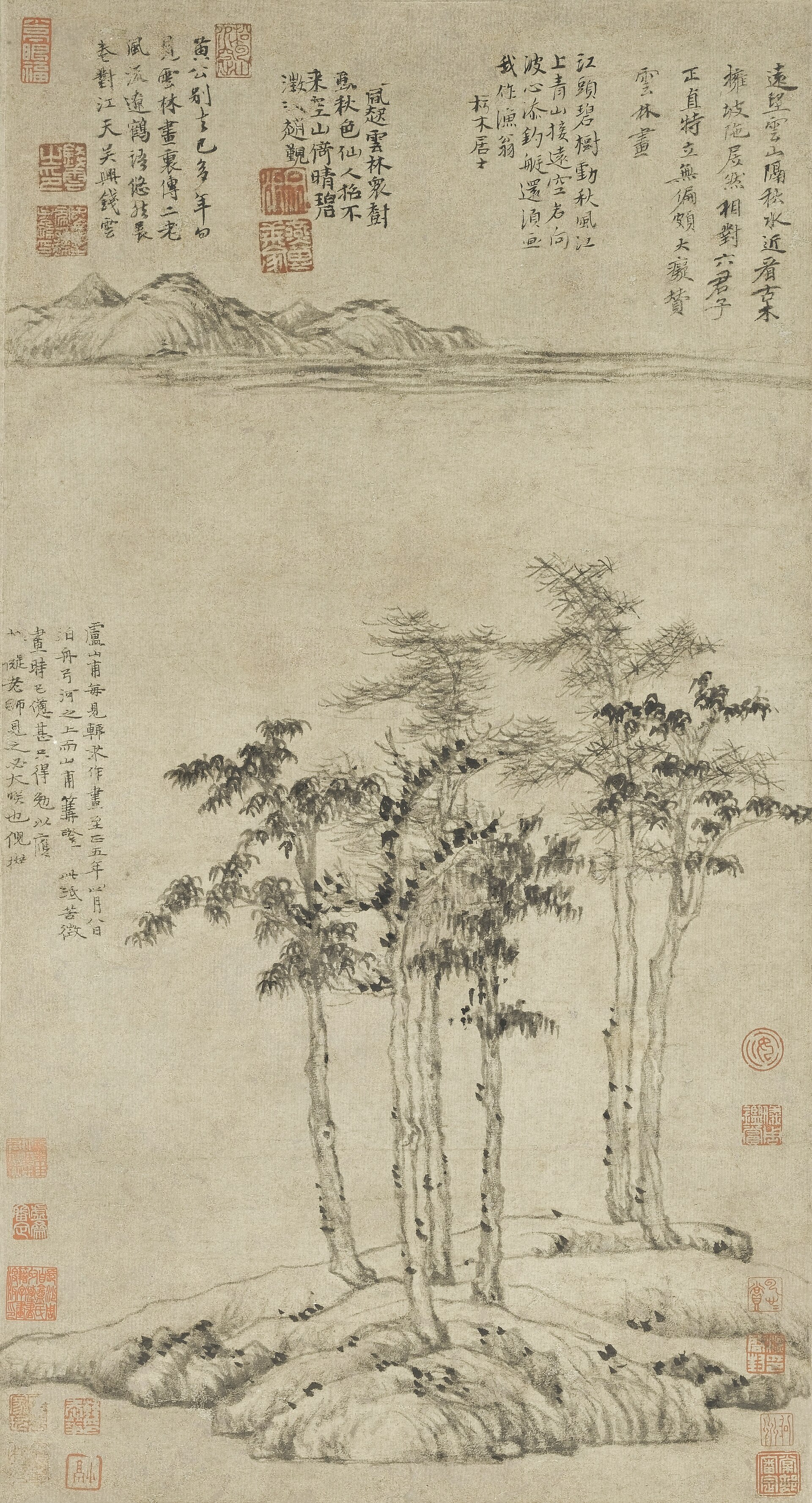
《六君子图》是元代画家倪瓒的一部作品,作于1345年,藏于上海博物馆。为平远两段式构图,颇能反应画家的典型风格,当时山水画处于风急剧变化的时代,倪瓒的这种画法显得颇为超前。该图画的是太湖一代秋天的景色:画面上方是一片平缓的山丘,中部则是一大片波澜不惊的湖面。前景画着六棵挺拔的树——松、柏、樟、槐、楠、榆,各有象征意义。树梢比湖对岸地平线略低,扎根在荒坡之上,显出孤傲、正直清高的的性格。全图为两横一竖结构,简洁而深含意蕴。
画中有作者自题的作画经过:“卢山甫每见辄求作画,至正五年四月八日,泊舟弓河之上,而山甫篝灯出此纸,苦征余画,时已惫甚,只得勉以应之。大痴老师见之必大笑也”。还有黄公望的题诗:“居然相对六君子,正直特立无偏颇。”
摘自维基百科「六君子图」,按 CC BY-SA 4.0 使用,繁体已转简体,去掉了参考文献、外部链接等尾部小节和表格,其余文字未作改动。
中文条目比较短,展开看英文维基百科的条目(英文原文)
Six Gentlemen is a landscape painting by the Yuan dynasty Chinese artist Ni Zan (1301–1374). The work portrays six trees along a riverbank, a metaphor for the principled seclusion of virtuous gentlemen in an era of violent upheaval and foreign occupation. As the first of Ni Zan’s paintings to demonstrate the stark, minimalist style for which he is known, Six Gentlemen marked a turning point in his artistic career. He would frequently return to its subject matter in later years, producing many subsequent works of nearly identical composition and style.
Description
Ni Zan painted Six Gentlemen while visiting his friend, the art collector Lu Heng, in the spring of 1345. Ni’s inscription explains that he arrived by boat at Lu’s house on May 10, and that Lu immediately brought paper and asked him to paint something for him (a request he made whenever the two of them met). Though tired, Ni Zan obliged and produced the painting by the light of a lamp.
The result was a sparse landscape in which six old trees stand on a small bank in the lower foreground, across an expanse of water from some distant hills in the background. Ni Zan’s inscription suggests that “old master Dachi”, the respected elder artist Huang Gongwang, would laugh when he saw the painting. It is accompanied by a second inscription by Huang himself, who was also a guest at Lu Heng’s house at the time, and examined the painting soon after it was made. It is from Huang’s inscription that the painting receives its name, Six Gentlemen:
Another inscription, possibly by a different guest at Lu Heng’s house, volunteers its author as a model if Ni Zan should ever decide to add a fisherman to his painting later. The final inscription, added after Huang’s death, remarks that he and Ni Zan will live on in the form of the painting.
Analysis
The starkly barren landscape depicted in Six Gentlemen might represent Ni Zan's feelings about recent upheavals in the region around his home in Wuxi. The devastating Yellow River flood of the previous year displaced many people in the area, and gave rise to banditry and peasant rebellions.
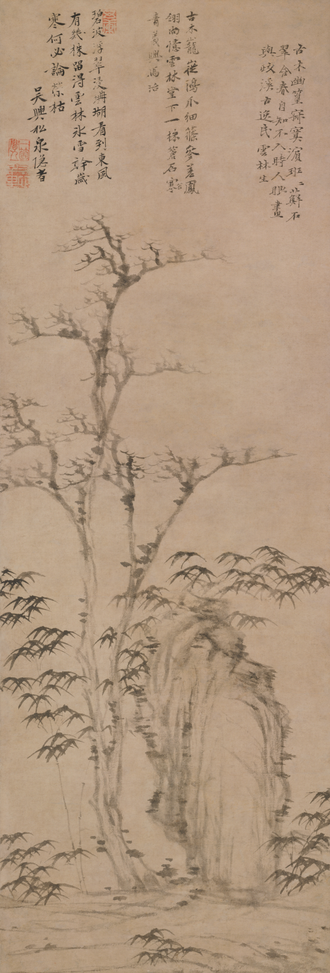
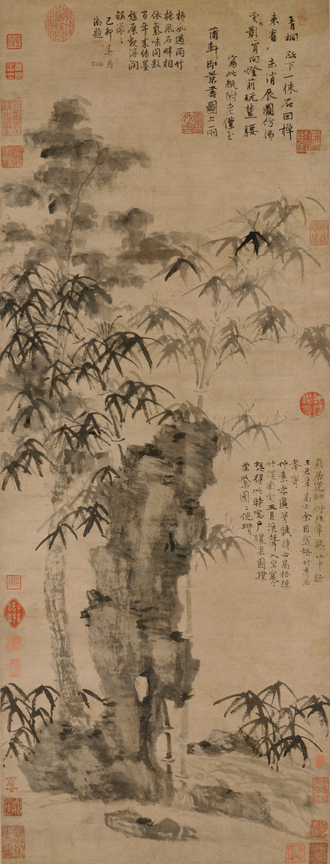
The composition and brushwork of Six Gentlemen are simpler compared to Ni Zan’s earlier paintings, such as Enjoying the Wilderness in an Autumn Grove (1339) and Water and Bamboo Dwelling (1343), which had been influenced by the styles of Dong Yuan and Zhao Mengfu. Ni's later approach to landscape painting was expressed by his statement that "what I call painting is no more than free brushwork done sketchily" and that "I never seek representative likeness since I paint only for my own amusement". The austerity of Ni's brushwork is also thought to be connected to his reputed obsession with cleanliness and purity.
The visual isolation of the “six gentlemen” in the painting may reflect the attitude of intellectuals like Ni who preferred to live a life of seclusion in the countryside rather than serve as government officials under the Mongol-led Yuan dynasty, which had conquered the native Chinese Song dynasty. This theme is suggested by Huang’s inscription, which may be referring to the likeminded individuals gathered in Lu Heng’s house when Ni Zan painted Six Gentlemen, or to the “six gentlemen” of the Song dynasty, a group of officials who were purged from the government for their views. The importance of individual expression (both political and aesthetic), and the rejection of realistic detail, are major themes in late Yuan dynasty literati painting.
Similar works
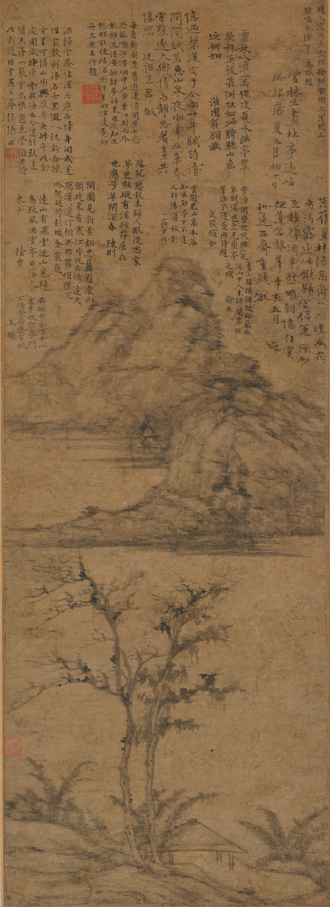
Six Gentlemen marks the genesis of Ni's personal style. His subsequent landscapes usually follow the same pattern: minimal compositions with a few trees, low mountains across a lake or river, occasionally an empty hut, and no human figures. Examples from Ni's later years include Empty Pavilion in a Pine Grove (1354), Wind among the Trees on the Riverbank (1363, painted after his wife's death), The Rongxi Studio (1372), and Woods and Valleys of Mount Yu (also 1372). This style was also frequently imitated by later artists, who took Ni and the other literati painters of the Yuan dynasty as archaic models to emulate.
相关词条
相关作品