艺廊

沙科佩
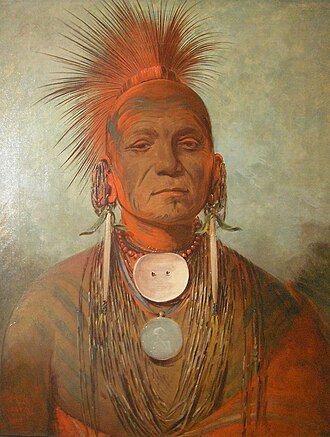
Sha-có-pay, The Six, Chief of the Plains Ojibwa
Sha-có-pay is an oil-on-canvas painting from life by American artist George Catlin, from 1832. It depicts an Indigenous American named Sha-có-pay, who was chief of the Plains Ojibwe. It was painted at Fort Union.
Catlin traveled throughout Western North America and painted Indians at a time when the only contact with Whites was from explorers and traders. The painting shows traditional Plains Ojibwe clothing such as a beaded buckskin shirt, a buffalo-hide robe, eagle feathers, hair pipes, and a beaded necklace that is unique to the tribes of the northernmost plains (Ojibwe and Cree). The portrait was painted during a trip to Fort Union in 1832.
Catlin said:
The chief of that part of the Ojibbeway tribe who inhabit these northern regions … is a man of huge size; with dignity of manner, and pride and vanity, just about in proportion to his bulk. He sat for his portrait in a most beautiful dr…
摘自英文维基百科「Sha-có-pay」(CC BY-SA 4.0),暂时没有中文条目。
相关作品