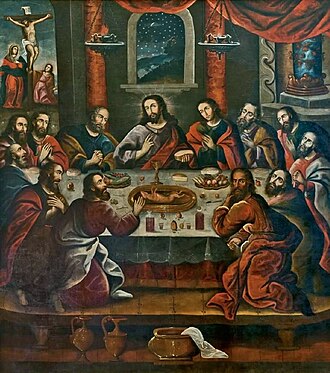
艺廊
资料卡
- 类型
- 乙级宗座圣殿、天主教主教座堂
- 创立
- 1559 年
- 国家
- 秘鲁
- 所在地
- 库斯科省、库斯科
- 地址
- Plaza de Armas s/n
- 建筑风格
- 巴洛克建筑
- 文化遗产级别
- 世界遗产、cultural heritage of Peru
- 坐标
- 南纬 13.5163°,西经 71.9781°
资料来自 Wikidata Q2942242(CC0)。
博物馆介绍
库斯科圣母升天圣殿主教座堂(西班牙语:Catedral Basílica de la Virgen de la Asunción del Cusco)是天主教库斯科总教区的主教座堂,连同毗邻的较小的胜利堂(Iglesia del Triunfo,建于1536年,库斯科第一座基督教堂)和圣家堂(Sagrada Familia),位于秘鲁库斯科中心的主广场兵器广场(Plaza de Armas)东北。。主教座堂的建造开始于1559年,位于印加王宫Kiswarkancha的遗址上。主教座堂于1654年建成,建造工程几乎长达百年。整个建筑群占地3956平方米,为库斯科历史中心最重要的宗教古迹。
库斯科主教座堂不仅是一个宗教场所,也是库斯科殖民地艺术的宝库,拥有许多考古文物。1983年,作为库斯科古城的一部分列入世界遗产名录。
摘自维基百科「库斯科主教座堂」,按 CC BY-SA 4.0 使用,繁体已转简体,去掉了参考文献、外部链接等尾部小节和表格,其余文字未作改动。
中文条目比较短,展开看英文维基百科的条目(英文原文)
The Cathedral of Cusco (Spanish: Catedral de Cusco) or Cathedral Basilica of the Virgin of the Assumption (Spanish: Catedral Basílica de la Virgen de la Asunción) is the main temple of the city of Cusco, in Peru and houses the headquarters of the Archdiocese of Cusco. The Cathedral Basilica of Cusco, together with the Triunfo temple make up the Cathedral Complex, it is located in the northeast sector of the current Plaza de Armas of Cusco. In the place that, during the Inca period, was occupied by both the Suntor Wassi (lit. "Government House") and the Kiswarkancha or Palace of the eighth Inca Viracocha. The complex occupies an area of 3,920 square meters and is the most important religious monument in the Historic Center of Cusco.
Since 1972 the temple has been part of the Monumental Zone of Cusco declared as a Historical Monument of Peru. Also, in 1983, being part of the historic center of the city of Cusco, it is part of the central zone declared by UNESCO as World Heritage Site.
History
Kiswarkancha
The Incas built the temple known as Kiswarkancha on the main square in Cusco. It was the Inca palace of Viracocha, ruler of the Kingdom of Cusco around a century before the Spanish colonists arrived. The aboriginal name of this city was Qusqu. Although it was used in Quechua, its origin has been found in the Aymara language. The word itself originated in the phrase qusqu wanka ("Rock of the owl"), attending to the foundational myth of the Ayar siblings.
Near to the Kiswarkancha was the Suntur Wasi, an armoury and heraldry centre for the Inca royalty. When the Spanish conquistadores arrived in Cuzco, they decided to take down the temple and build their Christian cathedral in that prominent site.
Basilica Cathedral of our Lady of Assumption
... Well, this reaches me highly, existing, among the regions recently discovered under the auspices of the ever augustus emperor of the Romans, our very beloved son Charles, who is at the same time king of Castile, León and Aragon, existing a region called Peru whose inhabitants are knowledgeable about the divine law, and in which region many Christian Indians live; and wishing the same Emperor and King Charles with religious affection, that in the aforementioned region of Peru, subject to his mandate, the cult of that most glorious name (Christ) of whom is the entire universe, and all its plenitude and everything in it exists; may its inhabitants be led to the light of truth and spread the salvation of souls; and also wishing that the city of Cusco located in the same region where there is already a Church under the title of Santa María, be elevated to the rank of City and Diocese and the former Church of Santa María to Cathedral Church.
Given in Rome next to St. Peter year etc. February 13, one thousand five hundred thirty-six.
The Cathedral of Cusco is the result of various projects carried out by different architects who took over at the head of the works. The first cathedral in Cusco is the Iglesia del Triunfo, built in 1539 on the basis of the palace of Viracocha Inca. At present, this church is an auxiliary chapel of the Cathedral.
The cathedral of Cusco, like that of Lima, is a temple with three naves with two more chapels and a flat front wall. (...) The three naves are of equal height, as in the cathedrals of Lima and Jaén. This last one was the immediate precedent of the two Peruvian cathedrals.
In 1538, after the return of Vicente Valverde with the cédulas reales that recognized him as bishop of Cusco, he began the construction of a cathedral by order of erection on September 4, 1538. However, this work would remain in its infancy, as can be deduced from the response of the Cabildo of Cusco to the request of the Cathedral dean Luis de Morales, which indicated that the work would be suspended until the following summer. In the following years, given the narrowness of the assigned site, an attempt was made to move the cathedral first to the part that formerly corresponded to the Palace of Pachacuti called Qasana and that Francisco Pizarro reserved for him (current Portal de Panes of the Plaza de Armas).……
节选,摘自英文维基百科「Cusco Cathedral」,按 CC BY-SA 4.0 使用。