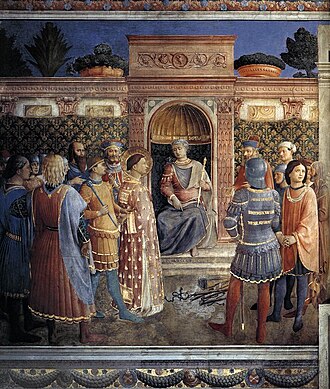
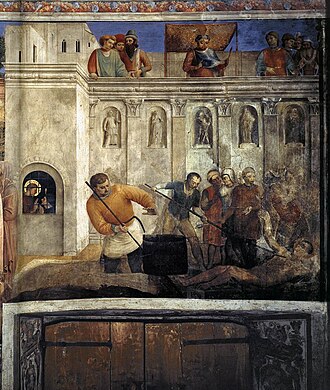
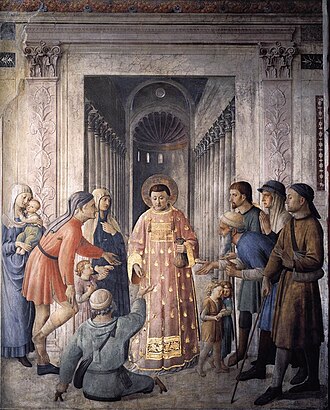
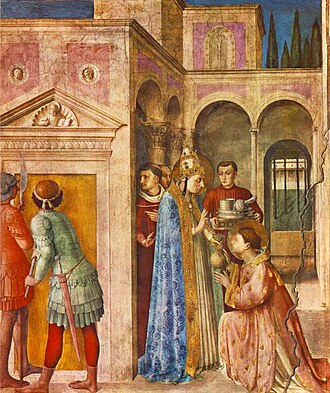
艺廊
资料卡
- 类型
- 宫殿、官邸、意式宫殿、palace of the Popes
- 创立
- 1589 年
- 国家
- 梵蒂冈
- 所在地
- 梵蒂冈
- 建筑师
- 多纳托·伯拉孟特
- 建筑风格
- 文艺复兴建筑
- 所有者
- 圣座
- 坐标
- 北纬 41.9036°,东经 12.4564°
资料来自 Wikidata Q145093(CC0)。
博物馆介绍
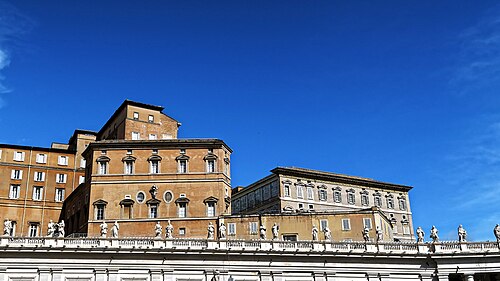
宗座宫(拉丁语:Palatium Apostolicum;意大利语:Palazzo Apostolico)是教宗的正式官邸,位于梵蒂冈城,又称教宗宫、使徒宫、梵蒂冈宫或神圣宫殿。最早于5世纪由教宗西玛克筹建,作为拉特朗宫的替代居所;后来经过多次毁坏及重建,直到1447年,教宗尼各老五世决定兴建新的建筑,即今日所见之宗座宫。现今的建筑样貌由教宗思道五世(西斯笃五世)确立,因此梵蒂冈官方亦将其称为西斯笃五世宫(Palazzo di Sisto V)以做纪念。
该官邸结构复杂。内设教宗寓所、罗马教廷各机构、众多小圣堂、梵蒂冈博物馆、梵蒂冈图书馆等。在这1,000多个房间中,最著名是绘有米开朗基罗壁画《最后的审判》和《创世纪》的西斯汀小堂,以及拉斐尔房间等。
尽管传统上宗座宫是教宗的官方居所,但教宗方济各于2013年就任后并没有入住宗座宫,而是选择居住在圣玛尔大之家。他的继任者良十四世在2025年就任后重新以此作为正式寓所。
其他
其他教宗宅邸尚有罗马近郊的冈道尔夫堡教宗别墅,为教宗的夏季居所。梵蒂冈宫在15世纪取代了拉特朗宫,但后来它曾一度被奎里纳尔宫抢了风头,但奎里纳尔宫在意大利统一后成为意大利国家元首的官邸。
参看
教宗宫殿
波奇亚寓所
克莱孟大厅
圣玛尔大之家
教宗绅士
摘自维基百科「宗座宫」,按 CC BY-SA 4.0 使用,繁体已转简体,去掉了参考文献、外部链接等尾部小节和表格,其余文字未作改动。
中文条目比较短,展开看英文维基百科的条目(英文原文)
The Apostolic Palace is the official residence of the Pope, the head of the Catholic Church, located in Vatican City. It is also known as the Papal Palace, the Palace of the Vatican and the Vatican Palace. The Vatican itself refers to the building as the Palace of Sixtus V, in honor of Pope Sixtus V, who built most of the present form of the palace.
The building contains the papal apartments, various offices of the Catholic Church and the Holy See, private and public chapels, the Vatican Museums, and the Vatican Library, including the Sistine Chapel, Raphael Rooms, and the Borgia Apartments. Tourists can see this part of the palace, but other parts, such as the Sala Regia (Regal Room) and Cappella Paolina, have long been closed to tourists, though the Sala Regia allowed occasional tourism by 2019. The Scala Regia (Regal Staircase) can be viewed from one end and used to enter the Sala Regia. The Cappella Paolina remains closed to tourists.
History
In the 5th century, Pope Symmachus built a papal palace close to Old St. Peter's Basilica which served as an alternative residence to the Lateran Palace. The construction of a second fortified palace was sponsored by Pope Eugene III and extensively modified under Pope Innocent III in the twelfth century.
Upon returning to Rome in 1377 after the interlude of the Avignon Papacy, which saw Rome subject to civil unrest and the abandonment of several Christian monuments, the popes chose to reside first at Basilica di Santa Maria in Trastevere and then at Basilica di Santa Maria Maggiore. The Vatican Palace had fallen into disrepair from lack of upkeep, and the Lateran Palace underwent two destructive fires, in 1307 and 1361, which resulted in irreparable harm. In 1447, Pope Nicholas V razed the ancient fortified palace of Eugene III to erect a new building, the current Apostolic Palace.
In the 15th century, the palace was placed under the authority of a prefect. This position of apostolic prefecture lasted from the 15th century until the 1800s, when the Papal States fell into economic difficulties. In 1884, when this post was reviewed in light of saving money, Pope Leo XIII created a committee to administer the palace.
The major additions and decorations of the palace are the work of the following popes for 150 years. Construction of the current version of the palace began on 30 April 1589 under Pope Sixtus V and its various intrinsic parts were completed by later successors, Pope Urban VII, Pope Innocent XI and Pope Clement VIII. In the 20th century, Pope Pius XI built a monumental art gallery and museum entrance.
Construction of the Palace took place mainly between 1471 and 1605. Covering 162,000 square metres (1,743,753 square feet), it contains the papal apartments, offices of the Catholic Church and Holy See, chapels, Vatican Library, museums, and art galleries.
Structure
The palace is run by the Prefecture of the Pontifical Household. The palace is more accurately a series of self-contained buildings within the well-recognized outer structure which is arranged around the Courtyard of Sixtus V (Cortile di Sisto V). It is located northeast of St Peter's Basilica and adjacent to the Bastion of Nicholas V and Palace of Gregory XIII.
The palace houses both residential and support offices of various functions as well as administrative offices not focused on the life and functions of the Pope himself.
Sistine Chapel
Perhaps the best known of the palace chapels is the Sistine Chapel named in honor of Sixtus IV (Francesco della Rovere). It is famous for its decoration that was frescoed throughout by Renaissance artists including Michelangelo, Sandro Botticelli, Pietro Perugino, Pinturicchio, Domenico Ghirlandaio, and others.
One of the primary functions of the chapel is as a venue for the election of each successive Pope in a conclave of the College of Cardinals. In this closed-door election, the cardinals choose a successor to the apostle and traditional first Pope, Peter, who is (according to tradition) buried in the crypts of nearby St. Peter's Basilica.
节选,摘自英文维基百科「Apostolic Palace」,按 CC BY-SA 4.0 使用。