艺廊

资料卡
- 类型
- 博物馆、美术馆、国立博物馆
- 创立
- 1982 年
- 国家
- 墨西哥
- 所在地
- 考乌特莫克联邦区
- 地址
- Calle Tacuba 8. Centro Histórico、Tacuba 8, Centro Histórico, 6010
- 文化遗产级别
- Artistical monument
- 坐标
- 北纬 19.4364°,西经 99.1394°
资料来自 Wikidata Q1138147(CC0)。
博物馆介绍
墨西哥国家美术馆(西班牙语:Museo Nacional de Arte)是墨西哥的国家美术馆,位于墨西哥城历史中心。
墨西哥国家美术馆最初位于宪法广场,后来搬迁数次,1982年搬迁到塔库巴街(Tacuba)8号的新古典主义建筑。
机构
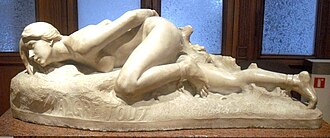
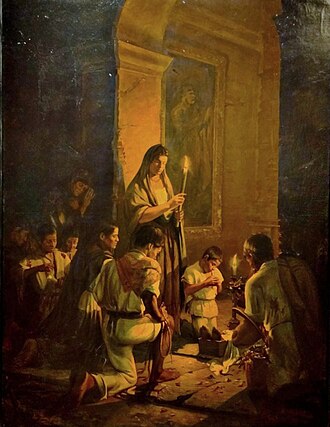
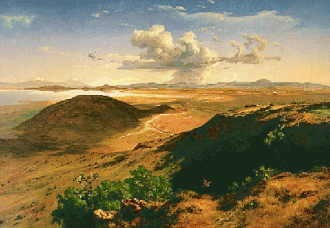
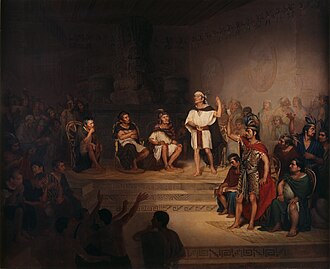
墨西哥国家美术馆成立于1982年,目前专注于16世纪至20世纪上半叶墨西哥艺术的展览、研究和传播。永久藏品3000余件,展览面积5500平方米。
通信宫大楼
墨西哥国家美术馆设于古老的通信宫内。20世纪初,政府聘请意大利建筑师西尔维奥·康特里(Silvio Contri)设计并建造了这座“宫殿”,以容纳通信和公共工程秘书处,旨在展示墨西哥对现代化的承诺。这座宫殿建于圣安德烈和冈萨雷斯埃切维里亚医院的旧址上。建筑风格是折衷主义的,融合了过去建筑风格的元素,体现在雕塑、灯光和石雕的形式。中间是一个通往上层的半圆形楼梯。
后来,这座建筑用作墨西哥国家档案馆。从1982年起作为国家艺术博物馆。大楼前的广场以曼努埃尔·托尔萨命名,那里有他的作品,卡洛斯四世骑马雕像。根据基座上的牌匾,不是出于对国王的尊敬,而是为了保存一件艺术品。今天,几乎全部建筑都被用来存放美术馆的永久收藏品,接待大厅和露台则用于音乐会、书籍签名和新闻发布会等活动。
摘自维基百科「墨西哥国家美术馆」,按 CC BY-SA 4.0 使用,繁体已转简体,去掉了参考文献、外部链接等尾部小节和表格,其余文字未作改动。
中文条目比较短,展开看英文维基百科的条目(英文原文)
The Museo Nacional de Arte (MUNAL) (English: National Museum of Art) is the Mexican national art museum, located in the historical center of Mexico City. The museum is housed in a neoclassical building at No. 8 Tacuba, Col. Centro, Mexico City. It includes a large collection representing the history of Mexican art from the mid-sixteenth century to the mid 20th century. It is recognizable by Manuel Tolsá's large equestrian statue of Charles IV of Spain, who was the monarch just before Mexico gained its independence. It was originally in the Zocalo but it was moved to several locations, not out of deference to the king but rather to conserve a piece of art, according to the plaque at the base. It arrived at its present location in 1979.
The institution
The museum was founded in 1982 as the Museo Nacional de Arte, and re-inaugurated in 2000, after reopening its doors to the public as MUNAL after intense remodeling and technical upgrades to the facility. It currently focuses on the exhibition, study and diffusion of Mexican and international art from the 16th century to the first half of the 20th century. Its permanent collection contains more than 3,000 pieces and has 5,500m2 of exhibition space. MUNAL is a subdivision of the Instituto Nacional de Bellas Artes and as part of this organization is involved in projects concerning the conservation, exhibition, and study of the fine arts of Mexico. The museum also offers workshops, colloquiums, publication and other outreaches to the public. There are also volunteer opportunities such as the Voluntariado and the Amigos de MUNAL associations.
The Palace of Communications building
MUNAL is located in the old Palace of Communications. In the early part of the 20th century, the government hired Italian architect Silvio Contri to design and build this "palace" to house the Secretariat of Communications and Public Works, with the intention to show Mexico's commitment to modernization. The Palace was constructed on the former site of the hospitals of San Andres and of Gonzalez Echeverria. The architectural design is eclectic, mixing elements of past architectural styles, which is characteristic of that time period. This blending would later solidify into a movement called "modernismo" both because of the tendency to use newly devised construction techniques and the tendency to use metal in the decorative aspects, to symbolize progress in the Industrial Age. The decorative elements of the building were done by the Coppedé family of Florence, who designed the door knockers, the window frames, the leaded crystal, the stonework, the furniture, lamps and ironwork among many other elements. Over the years, much of the Palace deteriorated until around 2000, when Project MUNAL restored the palace to its original look, while also adding the latest technology for the preservation of artistic works.
Two rooms that stand out are the decoration of the Reception Hall and the sculptures in the Patio de los Leones. The Reception Hall is on the second floor and designed to imitate the splendor of similar halls in Europe. It is profusely decorated with precious metal and crystal ornaments as well as allegorical murals dedicated to themes such as science, the arts, liberty, history, work and progress. The work devoted to the concept of progress subdivides into four themes of force, justice, wisdom and wealth. This hall became the preferred place for President Porfirio Díaz to perform public declarations and receive dignitaries from abroad. Like the rest of the building the Patio of the Liones synthesizes a number of different architectural styles. The two primary styles seen here are Classic and Gothic with other styles introduced in the forms of sculptures, lighting and sculpted stonework. In the center is a large semicircular staircase to the upper floors.
Later in the 20th century, the building served as the Archivo General de la Nación and from 1982 as the Museo Nacional de Arte. The plaza in front of the building is named after Manuel Tolsá, who created the statue of Carlos IV there, also known as El Caballito. Today almost all of the building is used to house the permanent collection of MUNAL with the Reception Hall and the Patio de los Leones used for events such as concerts, book-signings and press conferences.
节选,摘自英文维基百科「Museo Nacional de Arte」,按 CC BY-SA 4.0 使用。
同在考乌特莫克联邦区的博物馆
墨西哥的其他博物馆
馆藏画家
馆藏作品(本站收录 33 件)