 艺廊
Etruscan art was produced by the Etruscan civilization in central Italy between the 10th and 1st centuries BC. From around 750 BC it was heavily influenced by Greek art, which was imported by the Etruscans, but always retained distinct characteristics. Particularly strong in this tradition were figurative sculpture in terracotta (especially life-size on sarcophagi or temples), wall-painting, and metalworking, especially in bronze. Jewellery and engraved gems of high quality were produced.
Etruscan cast-bronze sculpture was renowned and widely exported, but relatively few large examples have sur…
摘自英文维基百科「Etruscan art」(CC BY-SA 4.0),暂时没有中文条目。
作品(15)

Apollo of Veii
Vulca · 公元前 550 年代

Sarcophagus of the Spouses
公元前 529–前 499 年
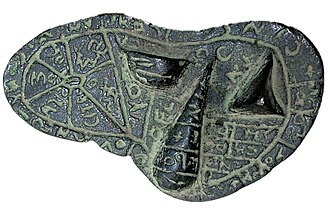
皮亚琴察之肝
公元前 2 世纪
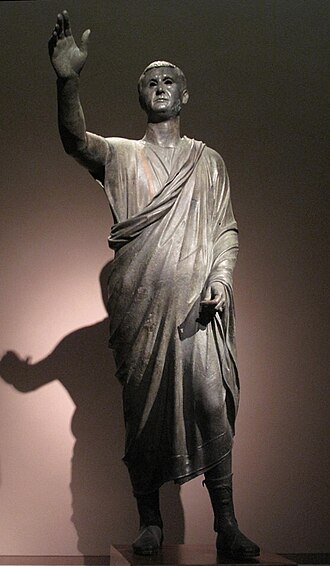
The Orator
公元前 100 年代

Mars of Todi
公元前 5 世纪

蒙特里昂青铜战车
公元前 574–前 549 年
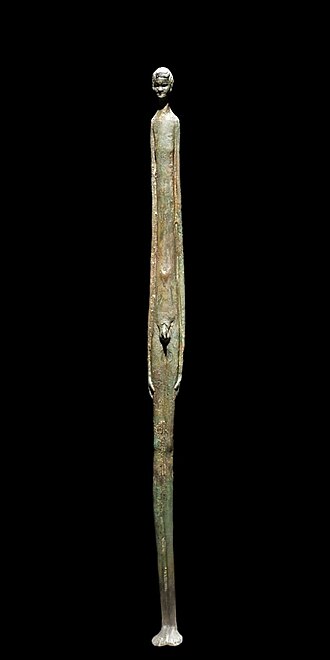
Ombra della sera
公元前 4 世纪

Winged-horses of Tarquinia
公元前 4 世纪

Situla of the Pania
公元前 7 世纪
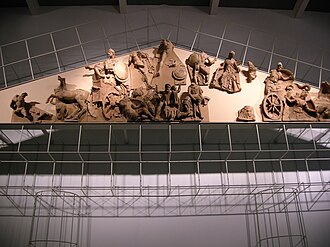
Talamone pediment
公元前 2 世纪
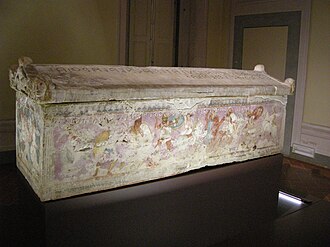
亚马逊石棺
公元前 349–前 324 年

Stele of Avile Tite
公元前 550 年代
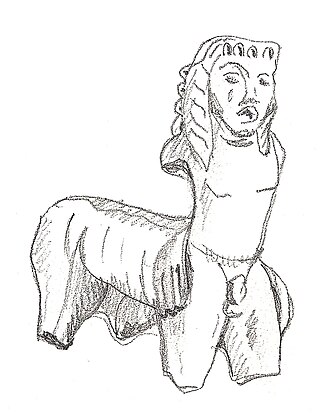
Centaur of Vulci
公元前 590 年代