艺廊
名画 › 题材
微型画像
资料卡
- 类型
- 艺术作品、绘画类型
- 上位类别
- 画作、袖珍艺术、Miniature painting
资料来自 Wikidata Q282129(CC0)。
题材介绍
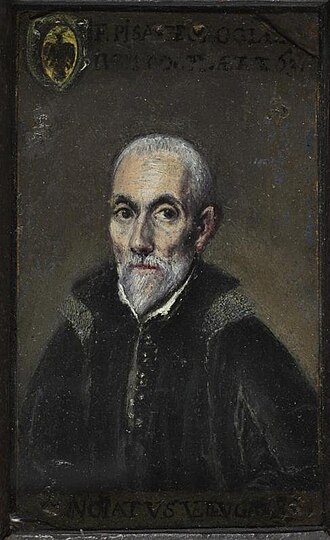
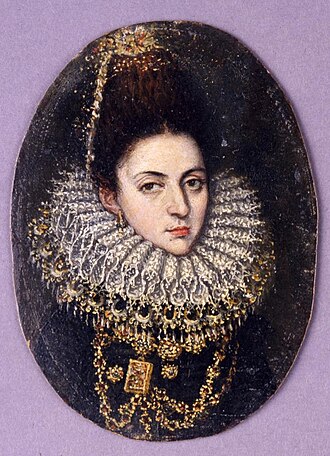
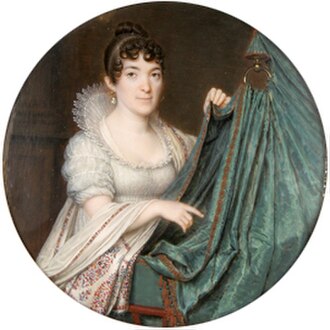
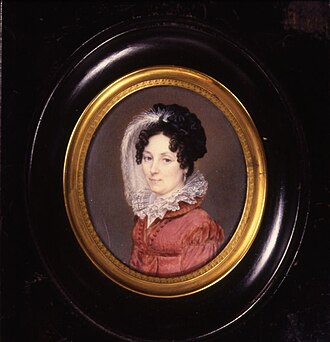
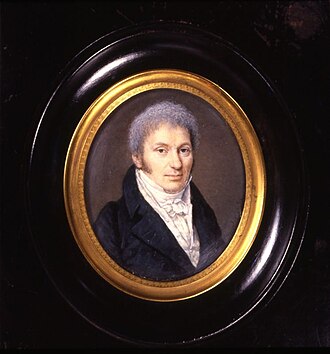
微型肖像画指的是小型肖像绘画,多采用水粉、水彩或珐琅彩绘制。这种艺术形式由泥金装饰手抄本中的细密画发展而来,16世纪盛行于英格兰和法国的贵族阶层,18世纪中期传遍欧洲各地,直至19世纪中期银版摄影法与摄影技术出现后微型肖像画才逐渐减少。
摘自维基百科「微型肖像画」,按 CC BY-SA 4.0 使用,繁体已转简体,去掉了参考文献、外部链接等尾部小节和表格,其余文字未作改动。
中文条目比较短,展开看英文维基百科的条目(英文原文)
A portrait miniature is a miniature portrait painting in a genre that arose from Renaissance art, often executed in gouache, watercolour, or enamel. Portrait miniatures developed out of the techniques of miniature detailing in illuminated manuscripts, and became popular among 16th-century elites, mainly in England and France. The genre spread across the rest of Europe from the middle of the 18th century, remaining highly popular until the development of daguerreotypes and photography in the mid-19th century. They were usually intimate gifts given within the family, or by hopeful males in courtship, but some rulers, such as King James I of England, gave large numbers as diplomatic or political gifts. They were often painted when a family member was going to be absent for a significant period, whether a husband or son going to war, a loved one emigrating, or a daughter getting married.
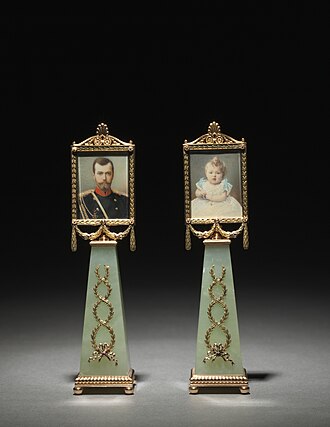
The first miniaturists used watercolour to paint on stretched vellum, or (especially in England) on playing cards trimmed to the shape required. The technique was often called limning (as in Nicholas Hilliard's treatise on the Art of Limning of c. 1600), or painting in little. During the second half of the 17th century, vitreous enamel painted on copper became increasingly popular, especially in France. In the 18th century, miniatures were painted with watercolour on ivory, which had now become relatively cheap. As small in size as 40 mm × 30 mm, portrait miniatures were often fitted into lockets, inside watch-covers or pieces of jewellery so that they could be carried on the person. Others were framed with stands or hung on a wall, or fitted into snuff box covers.
Early period
The portrait miniature developed from the illuminated manuscript, which had been superseded for the purposes of book illustration by techniques such as woodblock and calc printing. The earliest portrait miniaturists were famous manuscript painters like Jean Fouquet (self-portrait of 1450), and Simon Bening, whose daughter Levina Teerlinc mostly painted portrait miniatures, and moved to England, where her predecessor as court artist, Hans Holbein the Younger painted some miniatures. Lucas Horenbout was another Netherlandish miniature painter at the court of Henry VIII.
France also had a strong tradition of miniatures, centred on the court, although this came to concentrate in the mid-16th century on larger images, about the range of sizes of the modern paperback book, which might not qualify as miniatures in the usual sense. These might be paintings, or finished drawings with some colour, and were produced by François Clouet (c. 1510 – 1572), and his followers.
The earliest French miniature painters were Jean Clouet (died c. 1540), his son François Clouet, Jean Perréal and others; but of their work in portraiture we have little trace at the present day, although there are many portraits and a vast number of drawings attributed to them. The seven portraits in the Manuscript of the Gallic War (Bibliothèque Nationale) are assigned to Jean Clouet; and to them may be added a fine work, in the Morgan Library & Museum, representing the Marschal de Brissac. Following these men we find Simon Renard de St. André (1613–1677), and Jean Cotelle. Others whose names might be mentioned were Joseph Werner (1637–1710), and Rosalba Carriera (1675–1757).
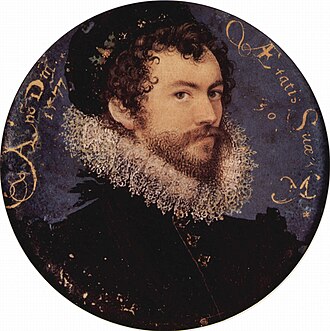
The first famous native English portrait miniaturist is Nicholas Hilliard (c. 1537–1619), whose work was conservative in style but very sensitive to the character of the sitter; his best works are beautifully executed. The colours are opaque, and gold is used to heighten the effect, while the paintings are on card. They are often signed, and have frequently also a Latin motto upon them. Hilliard worked for a while in France, and he is probably identical with the painter alluded to in 1577 as Nicholas Belliart. Hilliard was succeeded by his son Lawrence Hilliard (died 1640); his technique was similar to that of his father, but bolder, and his miniatures richer in colour.
节选,摘自英文维基百科「Portrait miniature」,按 CC BY-SA 4.0 使用。
相关的题材
主要画家
作品(28)