艺廊

资料卡
- 出生
- 1459 年
- 出生地
- 佛罗伦萨
- 去世
- 1537 年
- 逝世地
- 佛罗伦萨
- 国籍
- 佛罗伦萨共和国、佛罗伦斯公国
- 职业
- 画家、雕塑家、素描家
- 代表作
- Adoration of the Shepherds、The Annunciation、Venus、Lady of the Jasmin、Saint Bartholomew
资料来自 Wikidata Q8511(CC0)。
生平与创作
洛伦佐·迪·克雷迪(Lorenzo di Credi)是一位意大利文艺复兴时期的画家和雕塑家,以宗教主题的绘画和肖像画而闻名。除了偶尔前往附近的城市之外,他的一生都在佛罗伦斯度过。他最著名的经历是与年轻的达芬奇同时在安德烈·德尔·韦罗基奥的工作室工作,后者似乎对他的风格产生了相当大的影响。
他师从韦罗基奥,并成为他的首席助手,在师父于1488年去世后继承了工作室,当时洛伦佐·迪·克雷迪还只有二十多岁。他很大程度上延续了师父的风格,至少一直创作到1520年代,那时他的风格已经相当古板。他似乎没有亲自绘制过壁画,尽管他的工作室可能做过。乔尔乔·瓦萨里说,洛伦佐·迪·克雷迪避免创作各种大型画作,更喜欢创作精雕细琢的小幅作品。
生平
洛伦佐·迪·克雷迪于1456年或1459年出生于佛罗伦斯,父亲是金匠安德烈亚·德·奥德里戈(Andrea d' Oderigo)。他师从著名工匠安德烈亚·德尔·韦罗基奥,1480/81年首次有记录显示他在那里当学徒,工资很低。最终,他成为韦罗基奥的主要助手,在1482年至1483年师傅不在期间管理店铺,并在1488年韦罗基奥去世后继承了他的工作室。他接受韦罗基奥的委托,为皮斯托亚主教座堂完成了著名的《广场圣母》 。这幅画是1475年韦罗基奥接受委托创作的,但洛伦佐在1485 年至1491年间亲自完成。
摘自维基百科「洛伦佐·迪·克雷迪」,按 CC BY-SA 4.0 使用,繁体已转简体,去掉了参考文献、外部链接等尾部小节和表格,其余文字未作改动。
中文条目比较短,展开看英文维基百科的条目(英文原文)
Lorenzo di Credi (1456/59 – January 12, 1537) was an Italian Renaissance painter and sculptor best known for his paintings of religious subjects, and portraits. With some excursions to nearby cities, his whole life was spent in Florence. He is most famous for having worked in the studio of Andrea del Verrocchio at the same time as the young Leonardo da Vinci, who seems to have influenced his style considerably.
He trained with Verrocchio, and became his principal assistant, inheriting the workshop after his master's death in 1488, when Lorenzo was still in his twenties. He largely continued his master's style, working until at least the 1520s, by which time he was becoming rather old-fashioned. He does not seem to have painted frescos himself, although his workshop may have done so. Vasari says that he avoided large paintings of all sorts, preferring to create smaller works with a meticulous finish.
Life
Lorenzo was born in Florence in 1456 or 1459 to a goldsmith named Andrea d' Oderigo. He was apprenticed to the leading master Andrea del Verrocchio, where he is first recorded, on low wages, in 1480/81. He eventually became Verrocchio's primary assistant, running the shop during the master's absence in 1482-1483, and inherited his workshop on Verrocchio's death in 1488. On Verrocchio's behalf he completed the famous Madonna di Piazza for Pistoia Cathedral, commissioned from Verrocchio in 1475 but executed by Lorenzo between 1485 and 1491.
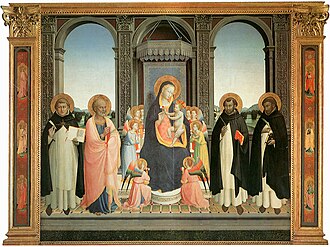
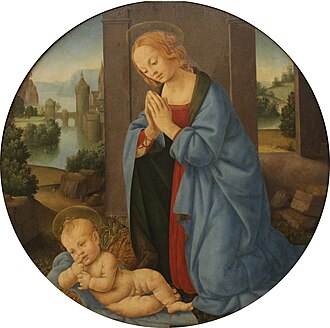
Lorenzo's earliest independent works include an Annunciation in the Uffizi, two panels of the Madonna and Child at the Galleria Sabauda in Turin, another at the National Gallery in London and Adoration of the Child at the Pinacoteca Querini Stampalia in Venice. From his maturity date the Madonna and Child with Saints Julian and Nicholas (1493) for the Mascalonzi chapel at the Cestello, Florence (Paris, Louvre), the Adoration of the Shepherds (1487) for Santa Chiara (now at the Uffizi) and the Baptism of Christ for the Chiostro dello Scalzo (now Fiesole, San Domenico). In 1501 he remade parts of Fra Angelico's high altarpiece for San Domenico, Fiesole. Later works include an altarpiece (1510–12) for the Ospedale del Ceppo, Pistoia (now in that town's Museo Civico) and many small religious panels, including an unfinished Crucifixion at Göttingen University and an Annunciation dated 1508 at the Harvard University Art Museums.
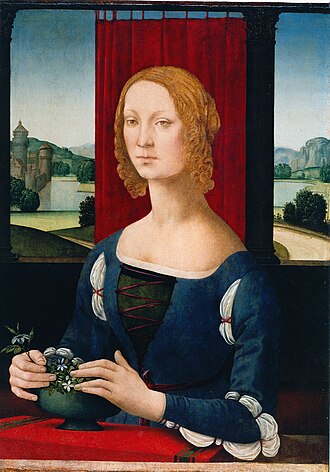
Lorenzo was also a painter of portraits. His most famous is the Portrait of Caterina Sforza, called La dama dei gelsomini, at the Pinacoteca in Forlí. Caterina Sforza was the Lady of Forlì and Imola in the Romagna and later a prisoner of Cesare Borgia. Lorenzo's portrait of her has been the subject of recent attention because of the sitter's resemblance to the Mona Lisa by Leonardo da Vinci. Another portrait by Lorenzo, perhaps of his brother's widow is the panel now at the Metropolitan Museum of Art. The composition of this work is often compared to Leonardo's Ginevra de' Benci at the National Gallery of Art, Washington, D.C.
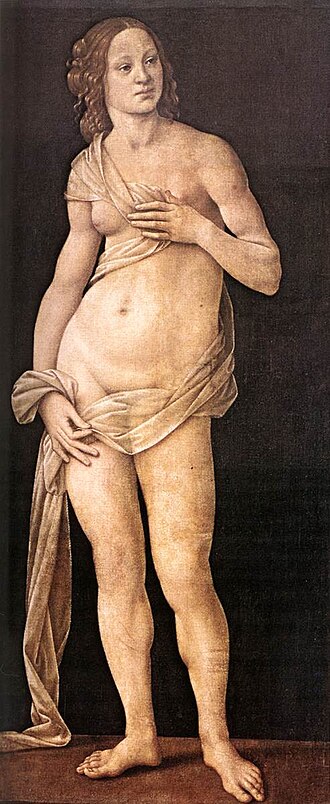
Several of his patrons had links to Savonarola, and apart from portraits, secular subjects such as mythological ones are absent from his known works, except for a nearly nude Venus for the Medici family. In 1504 he was appointed to the committee set up to decide where to place Michelangelo's David.
Giorgio Vasari devoted a biography to Lorenzo di Credi in his Lives of the Artists. Though Vasari praised Lorenzo's art for its high finish, he criticized him for being a perfectionist who was excessively diligent, ground his pigments too fine, and spent too much time distilling his oils.
Lorenzo had many pupils. His most important were Giovanni Antonio Sogliani, who assisted Lorenzo in many of his late works. Others include Tommaso di Stefano Lunetti and Antonio del Ceraiolo. Collaborators and followers included Giovanni di Benedetto Cianfanini, the Master of the Johnson Ascension of the Magdalene (named after a painting now in Philadelphia) and the anonymous artist known as "Tommaso" (also called Tommaso di Credi, the Master of the Czartoryski Tondo or the Master of the Santo Spirito Conversazione).
节选,摘自英文维基百科「Lorenzo di Credi」,按 CC BY-SA 4.0 使用。
师承与影响
同属「意大利文艺复兴」的画家
流派页 ›同时代的佛罗伦萨共和国画家
流派与收藏
作品(18)