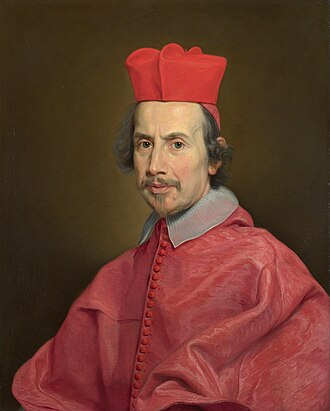
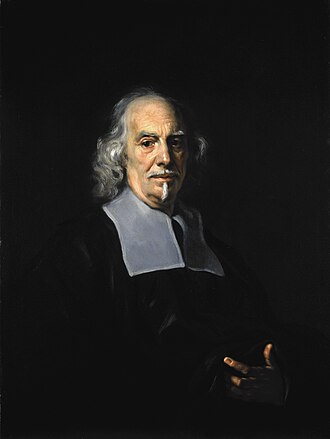
艺廊
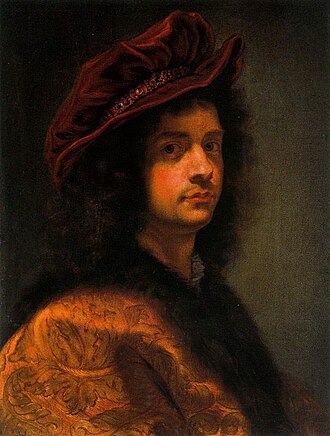
资料卡
- 出生
- 1639 年
- 出生地
- 热那亚、亨诺瓦
- 去世
- 1709 年
- 逝世地
- 罗马
- 国籍
- 热那亚共和国
- 职业
- 画家、雕塑家、视觉艺术家、壁画画家
- 代表作
- Conversion of Paul、The Sermon of St. John the Baptist、A Blessed Abbess Receiving the Host from the Hands of Christ、The Thanksgiving of Noah、Paintings by Giovanni Battista Gaulli il Baciccio in the Uffizi Gallery
资料来自 Wikidata Q520573(CC0)。
生平与创作
乔凡尼·巴蒂斯塔·高里(英语:Giovanni Battista Gaulli,1639年5月8日-1709年4月2日)是意大利巴洛克艺术以及洛可可早年时期的艺术家,他最出名的作品为在罗马耶稣教堂所做的大型拱顶壁画,并且深深受到济安·贝尼尼的影响。
摘自维基百科「乔凡尼·巴蒂斯塔·高里」,按 CC BY-SA 4.0 使用,繁体已转简体,去掉了参考文献、外部链接等尾部小节和表格,其余文字未作改动。
中文条目比较短,展开看英文维基百科的条目(英文原文)
Giovanni Battista Gaulli (8 May 1639 – 2 April 1709), also known as Baciccio or Baciccia (Genoese nicknames for Giovanni Battista), was an Italian Baroque painter working in the High Baroque and early Rococo periods. He is best known for his grand illusionistic vault frescos in the Church of the Gesù in Rome. His work was influenced by Gian Lorenzo Bernini.
Biography
Gaulli was born in Genoa, where his parents died from the plague of 1654. He initially apprenticed with Luciano Borzone. In the mid-17th century, Gaulli's Genoa was a cosmopolitan Italian artistic center open to both commercial and artistic enterprises from north European countries, including countries with non-Catholic populations such as England and the Dutch provinces. Painters such as Peter Paul Rubens and Anthony van Dyck stayed in Genoa for a few years. Gaulli's earliest influences would have come from an eclectic mix of these foreign painters and other local artists including Valerio Castello, Giovanni Benedetto Castiglione, and Bernardo Strozzi, whose warm palette Gaulli adopted. In the 1660s, he experimented with the cooler palette and linear style of Bolognese classicism.
He was first noticed by the Genoese merchant of artworks, Pellegrino Peri, who was living in Rome. Peri introduced him to Gianlorenzo Bernini, who promoted him. He found patrons among the Genoese Giovanni Paolo Oliva, a prominent Jesuit. In 1662, he was accepted into the Roman artists' guild, the Accademia di San Luca (Academy of Saint Luke), where he was to later hold several offices. The next year, he received his first public commission for an altarpiece, in the church of San Rocco, Rome. He received many private commissions for mythological and religious works.
From 1669, however, after a visit to Parma, Correggio's frescoed dome-ceiling in the cathedral of Parma, Gaulli's painting took on a more painterly (less linear) aspect, and the composition, organized di sotto in su ("from below looking up"), would influence his later masterpiece. At his height, Gaulli was one of Rome's most esteemed portrait painters. Gaulli is not well known for any other medium but paint, though many drawings in many media have survived. All are studies for paintings. Gaulli died in Rome, shortly after 26 March 1709, probably 2 April.
Church of the Gesù frescoes
In the first half of the 17th century, two counter-reformation "mother" churches (Sant'Andrea of the Theatines and the Chiesa Nuova of the Oratorians) had been extensively decorated. This was not true for the two large Jesuit churches in Rome, which, while rich in marble and stone, remained artistically barren by the mid-17th century. This void would have been particularly evident for Il Gesù with its cavernous blank plaster nave ceiling.
In 1661, the election of a new General of the Jesuit order, Gian Paolo Oliva, advanced the decoration. A new inductee into the order, the French Jacques Courtois (also known as Giacomo Borgognone) had become a respected painter and was the main candidate for its decoration. Oliva and the leader of the main patron family, the Duke of Parma, Ranuccio II Farnese whose uncle Cardinal Alessandro Farnese had endowed the construction of the church, began negotiating whether Borgognone should decorate the vault. Oliva wanted his fellow Jesuit for the commission, yet other prominent names such as Maratta, Ferri, and Giacinto Brandi were suggested. Ultimately, with Bernini's persuasive support and likely strong guidance thereafter, Oliva awarded the prestigious commission to the mere 22-year-old Gaulli. This choice may have been somewhat controversial, since Gaulli's naked figures recently frescoed in the pendentives for Sant'Agnese in Agone had offended some eyes, and, as had happened to Michelangelo's Sistine chapel altar frescoes, had required repainting to impose painted clothes.
Gaulli decorated the entire dome including lantern and pendentives, central vault, window recesses, and transepts' ceilings. The original contract stipulated the dome was to be completed in two years, and the remainder by the end of ten years. If it met the approval of a panel, Gaulli was to be paid 14,000 scudi plus expenses. Gaulli's main vault fresco was unveiled on Christmas Eve, 1679. After this, he continued frescoing of the vaults of the tribune and other areas in the church until 1685.
节选,摘自英文维基百科「Giovanni Battista Gaulli」,按 CC BY-SA 4.0 使用。
师承与影响
同属「Italian Baroque painting」的画家
流派页 ›同时代的热那亚共和国画家
流派与收藏
作品(11)