艺廊
资料卡
- 出生
- 15 世纪
- 出生地
- 帕维亚
- 去世
- 1470 年
- 职业
- 装饰抄本画家、画家
资料来自 Wikidata Q1627141(CC0)。
生平与创作
Belbello da Pavia, also known as Luchino Belbello from Pavia (d. c. 1470), was an Italian painter active between 1430 and 1462 and associated with Lombard book illumination. He was born in Pavia before soon moving to Milan where he caught the attention of Duke Filippo Maria Visconti. He was assigned to continue work on the Book of Hours of Gian Galeazzo Visconti, which he began sometime between 1412 and 1434. Belbello worked on it throughout different periods of his life, evident by his changing style in the illustrations. During the same years, he also worked on a Bible for Niccolo' III d'Este, a work finished by Jacopino d'Arezzo in 1434. Later in life, Belbello moved to Mantua, where he painted a Missal for Gianlucido Gonzaga (of the noble Gonzaga family) beginning in 1448. He was forced to leave Mantua because of moral misdemeanor in 1450 and returned to Pavia. In 1461, the Marchioness of Mantua, Barbara of Brandenburg, gave the work over to Girolamo da Cremona. The following year, after an unsuccessful attempt at appealing the Marchioness's decision, Belbello moved to Venice where he lived until his death.
Life
Belbello's background is relatively unknown, with no information regarding his year of birth and first formal training. His personal life remains a mystery due to a lack of documentation. His place of birth is one of the only things that is verified, with that being Pavia in the Lombard province. It is known that at a young age Belbello left for Milan where he met the Duke, Filippo Visconti.
Still working on the Book of Hours, Belbello worked for Niccolo' III d'Este in illustrating a bible. This was later taken over by Jacopino who completed it. Belbello is noted to have been in Mantua during 1448 where he worked for Gonzaga on a Missal. During his time there, Belbello eventually faced burning at the stake and was forced to flee due to a moral misdemeanor he was accused of in 1450. He stayed in contact with the Gonzaga family even after he returned to Pavia after his retreat from Mantua.
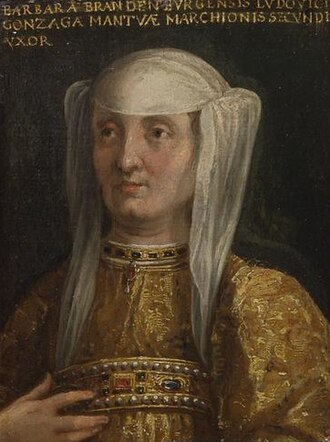
In 1461 Belbello was stripped of his task of working on the Missal by Barbara of Brandenburg, Marchioness of Mantua, in favor of a younger artist, Girolamo da Cremona. This was due to Belbello falling out of favor with the Marchioness, as his work no longer satisfied her. His replacement had based his models on Ferrarese as well as Mantegna. Belbello tried to appeal to the Marchioness, which subsequently failed and forced him to stop working on it. In 1462 Belbello seems to have been working for the Duchess of Milan for a short stint, as evident by a letter dated 1462.
After 1461 Belbello's style changed, becoming much more monumental and embracing artistic qualities from the Renaissance. This change in style is attributed to his forceful exit from his work on the Missal by the Marchioness of Mantua as well as his replacement with a younger artist who was more in style. His newer works offer a glimpse into the internal struggle of Belbello as he grappled with his old age and the changing taste of the public. Belbello is then thought to have returned to Venice where he stayed until his death, and where his style remained popular. Four pieces connect the artist to the city: A frontispiece of a manuscript in the Marciana, a manuscript in the Kupferstichkabinett, a Psalter in the British Museum, and an Antiphonary in the Monastery of S. Giorgio Maggiore in Venice.
Belbello was among the artists gravitating around the workshop of active Pavia miniaturists. His artistic tendencies were formed in the wake of Lombardy artists such as Michelino Molinari da Besozzo, as well as being somewhat influenced by French miniaturists. Some of his work also seems to be influenced by Michele Giambono, especially in Seated Evangelist, which has similarities to Giambono's St. Michael in the way its figure is spatially placed.
Modern rediscovery
Belbello remained unrecognized until the early twentieth century when Pietro Toesca attributed the style of the miniatures in the d'Este Bible to the illustrations found in the 2nd half of the Visconti Hours. Before Toesca's discovery, his works were often attributed to the French school, the schools of Siena, Bologna, and the Marches, as well as other artists such as Giovanni di Paolo and Sano di Pierto. Using letters from the Gonzaga family concerning the artist responsible for part of the illustrations in a Missal, Toesca was able to identify the Belbello mentioned in the correspondence. Toesca had attributed 12 works from the Kann Collection to a follower of Belbello from Venice in 1930, but in 1951, Professor Mario Salmi determined that they were products of Belbello. There was some controversy regarding fol. 57v of the Visconti Hours, which Toesci had credited to Belbello, despite some differences in the style when compared to his other illustrations located in the book. Samek-Ludovici rejected Toesci's attribution of the work on the grounds that it was too much of a departure from Belbello's style, being much coarser in nature and with sharper colors when compared to Belbello's other illustrations. Samek-Ludovici then attributed the work to a Master X, an unknown artist. Mirella Levi D'Ancona, author of The Wildenstein Collection of Illuminations: The Lombard School, reasons that this conflict in style was due to a difference in their dates of production. She argues that due to some particularities in the design of Filippo Maria's portrait in fol. 57v, that the work must have been started after the Duke's death in 1447. The details in question are the inclusion of clouds surrounding Filippo's bust as rays of light radiate outward, glorification that would be inappropriate if the Duke had still been living when it began. Thus she states that Belbello's work on the Book of Hours must have been interrupted by the Duke's death while he was working in Mantua for the Gonzagas, and he resumed his work when he was forced to flee in 1461.
A "Master of Murano" was identified in an essay by Serena Padovani, in which she argues that this miniaturist was a major influence on a specific fresco-artist who had worked on the Chapel of the Rocca of Vignola, a small agricultural center south of Modena.……
原文较长,这里只摘了前面一部分,摘自英文维基百科「Belbello da Pavia」(暂时没有中文条目,下面是英文原文),按 CC BY-SA 4.0 使用,去掉了参考文献、外部链接等尾部小节和表格,其余文字未作改动。